Victor Feguer
Kidnapping / Murder
Iowa, USA
American
1960
Capital Execution
EXECUTED (1963)
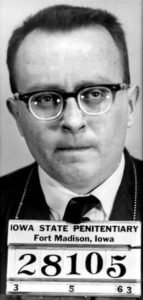
Victor Feguer was convicted of the 1960 kidnapping and murder of Dr. Edward Bartels in Dubuque, Iowa. Feguer had lured the physician to a rooming house under the guise of a medical emergency, subsequently murdering him.
His execution by hanging at the Iowa State Penitentiary on March 15, 1963, stands as a notable event in American penal history, as it was the last federal execution performed in the United States until the execution of Timothy McVeigh in 2001.
Feguer’s final meal request is frequently cited for its symbolic, albeit unusual, nature:
- A single olive with the pit still inside.
Feguer reportedly stated that he hoped an olive tree would grow from his body as a symbol of peace. Following the execution, the single pit was found in his suit pocket, becoming a piece of historical trivia often associated with his death.