UNKNOWN (TWO MALES)
.22-Caliber Pistol (Suspected)
Las Cruces, New Mexico, USA
Bowling Alley Employees & Family
February 10, 1990
4 Confirmed (3 Survivors)
UNSOLVED // COLD CASE
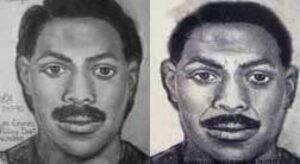 Unidentified Suspects
The perpetrators remain unidentified, but their actions suggest a pair acting with calculated, predatory intent. Unlike impulsive mass shootings, the Las Cruces massacre displayed hallmarks of a targeted “hit” or a robbery gone lethally wrong. The control exerted over the victims, the systematic grouping, and the clinical nature of the shooting suggest perpetrators who possessed either criminal experience or a profound, sociopathic need to dominate their victims completely before ending their lives.
Morning // The Breach: Two men entered the Las Cruces Bowl during business hours, posing as customers. They quickly rounded up seven individuals—including employees, a manager, and two young children—and forced them into the manager’s office at gunpoint.
The Execution: The perpetrators methodically shot each victim in the head. Before departing, they set fire to the office, likely in an attempt to destroy evidence and forensic markers. They then exited the building, vanishing before witnesses could provide descriptive details.
The Aftermath: A cook discovered the fire, leading to the survival of three individuals who were critically wounded but alive. The perpetrators have never been apprehended, and the motive remains a subject of intense forensic debate.
- Exhibit A (The Call): The perpetrators utilized a local payphone shortly before the massacre, potentially to coordinate with one another or signal the readiness of the operation.
- Exhibit B (Survivor Testimony): The three survivors were able to provide basic physical descriptions of the men, leading to decades of forensic sketches, but no definitive DNA or fingerprint matches have ever been secured.
- Exhibit C (Ballistic Evidence): The recovered bullets confirmed the use of a .22-caliber firearm, indicating a weapon chosen for its low acoustic profile—a critical signature for a “quiet” execution.
The Las Cruces Bowling Alley Massacre remains one of the most enigmatic unsolved cases in American criminal history. The clinical, almost robotic efficiency of the attackers, coupled with the tragic inclusion of children among the victims, has made this a case of profound public interest.
The case serves as a grim example of the limits of investigative technology in the pre-digital era. Despite thousands of interviews and national media attention, the lack of modern surveillance footage and digital forensic breadcrumbs has allowed the perpetrators to remain undetected for over 35 years.
The individuals who were targeted during the February 1990 massacre:
| Victim Name | Status |
|---|---|
| Amy Houser | Deceased (Age 13) |
| Steven Teran | Deceased (Age 26) |
| Valerie Teran | Deceased (Age 2) |
| Olga Teran | Deceased (Age 6) |
Note: Three additional individuals sustained critical gunshot wounds during the attack but survived, providing the primary eyewitness testimony for the investigation.