UNIDENTIFIED SUBJECT
Unknown / Psychological Coercion
Adelaide, South Australia
Vulnerable Minors (Sibling Group)
January 26, 1966
3 Missing (Presumed Deceased)
ACTIVE COLD CASE // UNSOLVED
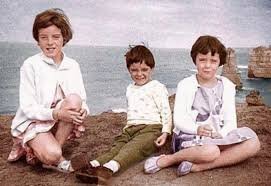 Beaumont Children
The abduction of the Beaumont children is a chilling study in predatory confidence. The offender operated on Australia Day, a bustling public holiday, at Glenelg Beach. Abducting three children simultaneously—especially when the eldest, nine-year-old Jane, was known to be exceptionally responsible and protective of her siblings—indicates a perpetrator highly skilled in rapport-building.
The psychological profile suggests a socially competent, organized offender who used a non-threatening, playful approach rather than brute force. By interacting with the children in plain view of dozens of beachgoers, he normalized his presence. The fact that the children’s belongings (towels, clothing, and a book) also vanished suggests the abductor lured them into a nearby vehicle under a safe pretext, controlling the environment before neutralizing them.
10:00 AM // The Departure: Jane, Arnna, and Grant leave their Somerton Park home, taking a five-minute public bus ride to Glenelg Beach. They are expected to return on the noon bus.
11:00 AM – 12:15 PM // The Grooming Phase: Multiple witnesses observe the children playing in the sprinklers on the Colley Reserve. They are seen interacting joyfully with a tall, blond man in his mid-30s. The man was seen helping them put on their clothes.
12:20 PM // The Financial Exchange: Jane purchases pasties and a meat pie from Wenzel’s Bakery using a £1 note. This is a critical anomaly; the children’s mother had only given them coins. The note is widely believed to have been given to them by the abductor.
3:00 PM // The Final Sighting: A postman who knew the children well sees them walking alone along Jetty Road, away from the beach, seemingly relaxed and happy. This is the last confirmed sighting of the Beaumont children.
- Exhibit A (Witness Descriptions): The suspect was consistently described as a tall, thin-faced man with athletic build and sun-bleached blond hair, wearing swim trunks, establishing the basis for a nationwide composite sketch.
- Exhibit B (The £1 Note): The purchase at the bakery proved the children were under the influence of an adult who provided them with money, a classic grooming tactic to establish trust.
- Exhibit C (Prior Surveillance): Following the disappearance, Arnna’s mother recalled a prior conversation where Arnna mentioned Jane had a “new boyfriend down the beach.” This suggests the abductor may have scouted and interacted with the children on previous days.
- Exhibit D (The 1968 Hoax Letters): Letters sent to the parents claimed Jane was living in Victoria with her abductor. They tormented the family for decades. In 1992, fingerprint and DNA technology finally proved the letters were a cruel hoax written by an uninvolved teenager.
Because the victims’ remains have never been recovered, the perpetrator’s physical post-mortem signature remains unknown. However, the abduction signature is highly defined. The killer targeted a sibling cluster, rather than a solitary child, which drastically increases the risk of detection. To mitigate this risk, he utilized patience, appearing as a friendly, paternal figure playing with them in the water.
His M.O. involved total concealment post-abduction. The lack of any physical trace—no clothing, no towels, no bodies—points to a predator who had immediate access to a vehicle and a private, secure secondary location to carry out his crimes and dispose of the remains flawlessly.
- Arthur Stanley Brown: A convicted serial child abuser whose physical appearance matched the 1966 composite sketch with chilling accuracy. He was active in Adelaide at the time, though Alzheimer’s disease prevented him from standing trial for other murders before his death in 2002.
- Harry Phipps: A wealthy local factory owner who lived mere hundreds of meters from Glenelg Beach. He bore a strong resemblance to the suspect. Decades later, his own son publicly accused Phipps of severe pedophilia and claimed he saw the children in their yard. Excavations at his former factory site in 2013 and 2018 yielded animal bones, but no human remains.
- Derek Percy: Australia’s most notorious child killer. While his M.O. involved horrific child murders, Percy was only 17 at the time and living in Victoria, making him an unlikely match for the “mid-30s” witness descriptions.
- Bevan Spencer von Einem: Implicated heavily in the later “Family Murders” of young men in Adelaide. Although a prolific predator, he was only 20 years old in 1966, again clashing with the primary witness timelines.
The Beaumont case is universally regarded as the moment Australia “lost its innocence.” Prior to January 1966, it was socially acceptable and common practice for children to roam unsupervised, use public transport, and spend entire days at the beach alone. The sheer scale and horror of the vanishing radically and permanently altered Australian parenting paradigms.
The police investigation was the largest in the nation’s history, involving widespread coastal drags, hundreds of interviews, and even the controversial employment of a Dutch parapsychologist, Gerard Croiset, who led police on several fruitless digs. Jim and Nancy Beaumont remained in their home for decades, keeping their phone number the same, hoping their children would one day return, before eventually passing away.
The three siblings who vanished on Australia Day, 1966:
| Victim Name | Age | Date & Location of Disappearance |
|---|---|---|
| Jane Nartare Beaumont | 9 | January 26, 1966 (Glenelg Beach) |
| Arnna Kathleen Beaumont | 7 | January 26, 1966 (Glenelg Beach) |
| Grant Ellis Beaumont | 4 | January 26, 1966 (Glenelg Beach) |