WOO BUM-KON
M2 Carbines / Hand Grenades
Uiryeong County, South Korea
Local Villagers / Civil Servants
April 26–27, 1982
56 Confirmed Homicides (35 Injured)
DECEASED // SUICIDE
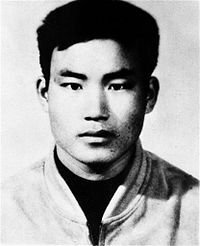
Woo Bum-kon was a 27-year-old South Korean police officer who had previously served in the South Korean Marines. Before his reassignment to the rural Kungryu police station in Uiryeong County, he was deemed unfit for prestigious duty in Seoul due to his volatile temper and heavy drinking, which earned him the nickname “Crazy Bird.” He harbored a deep inferiority complex regarding his career demotion and chronic financial struggles.
His pathology reflects severe grievance-driven violence and an extreme inability to regulate narcissistic injury. The catalyst for the massacre was shockingly trivial: on the afternoon of April 26, 1982, his live-in girlfriend woke him from a nap by swatting a fly on his chest. This minor domestic dispute triggered a catastrophic, displaced homicidal rage that he ultimately directed against the entire surrounding community.
7:30 p.m. // The Armory Breach: Heavily intoxicated and enraged following the domestic argument, Woo reported to the local police armory. Exploiting the lax security of the rural station, he gathered two M2 carbines, 144 rounds of ammunition, and seven hand grenades.
9:30 p.m. // Communications Blackout: In a crucial and devastating tactical move, Woo first targeted the local post office in Torongni. He murdered three telephone operators and physically cut the communication lines. This effectively isolated the surrounding villages, preventing anyone from calling emergency services.
10:00 p.m. – 2:00 a.m. // The Village Rampage: Over the next several hours, Woo moved systematically on foot through the neighboring villages of Kungryu, Ungye-Ri, Pyongchon-Ni, and others. He used his police uniform to trick residents into opening their doors, claiming there was a North Korean agent alert, before opening fire or detonating grenades inside their homes.
April 27, 5:35 a.m. // The Siege and Suicide: After being cornered by a massive, delayed police mobilization in a farmhouse in Pyongchon-Ni, Woo tied two active hand grenades to his body. He gathered three hostages from the family residing there and detonated the explosives, killing himself and the hostages, ending the 8-hour massacre.
- Exhibit A (The Arsenal): Two M2 Carbines and multiple explosive devices were stolen directly from the poorly guarded local police armory, highlighting severe, systemic security failures within the rural police force.
- Exhibit B (The Slashed Wires): The severed telephone cables at the Torongni post office proved the massacre was a tactically planned operation rather than a completely blind frenzy, designed to maximize the duration of his uncontested rampage.
- Exhibit C (The Uniform): Woo’s active-duty police uniform served as psychological camouflage. Villagers, culturally conditioned to respect and trust law enforcement, readily opened their doors to him in the middle of the night, sealing their fates.
Woo’s modus operandi combined the mobility of an active shooter with the tactical clearance of a military operation. He did not barricade himself immediately; instead, he stayed highly mobile, walking from village to village under the cover of darkness to maximize casualties before law enforcement could orient themselves in the rural terrain.
His signature was defined by profound betrayal. He weaponized the authority vested in his badge to gain entry into private sanctuaries. His use of hand grenades inside confined residential spaces indicated a desire for maximum, indiscriminate lethality, erasing entire family units in a single strike.
- Physicality & Demeanor: A 27-year-old, physically capable former Marine and active-duty patrolman. While sober, he was generally viewed as a functional officer, but alcohol acted as a severe catalyst for his underlying psychological instability.
- Psychiatric Post-Mortem: Believed to have suffered from an explosive personality disorder, drastically amplified by alcohol intoxication and perceived professional and personal failures.
- Custodial Resolution: Dead at the scene by his own hand (explosive suicide). Immune to prosecution.
The Uiryeong Massacre was the deadliest mass shooting committed by a lone gunman in modern history, a grim record it held globally for nearly 30 years until the 2011 Norway attacks by Anders Breivik.
The incident caused a massive national scandal in South Korea. The systemic failure of the local police—several of whom hid or fled the area instead of confronting their rogue colleague—resulted in intense public outrage. The disaster forced the resignation of the national police chief and the South Korean Minister of Interior, Suh Chung-hwa. It subsequently led to a complete overhaul of police armory security and the implementation of stricter psychological screening protocols for law enforcement nationwide.
A selection of the 56 victims murdered by Woo Bum-kon, illustrating the targeted destruction of the communication hub and the indiscriminate slaughter within the villages:
| Victim Profile / Location | Incident Phase |
|---|---|
| Torongni Post Office Operators (3 Victims) | Initial Target / Communications Sabotage |
| Residents of Torongni Village | Phase I Rampage |
| Residents of Ungye-Ri & Pyongchon-Ni | Phase II Rampage |
| Hostages at Pyongchon-Ni Farmhouse (3 Victims) | Final Siege / Suicide Detonation |
| *Plus approximately 50 additional civilian victims | Across Uiryeong County |