UNIDENTIFIED SUBJECT
Edged Weapons / Medical Saws
London, England (River Thames & Environs)
Women / Vulnerable Transients
May 1887 – September 1889
4 Confirmed (Up to 6 Suspected)
HISTORICAL COLD CASE // UNSOLVED
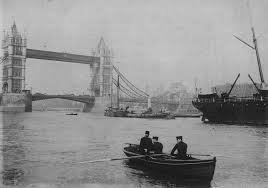 Unidentified Subject
Occurring in the same geographical area and during the exact same timeframe as the infamous Jack the Ripper murders, the Thames Torso Murders present a vastly different psychological and operative profile. While the Ripper was a disorganized, frenzied killer who attacked outdoors and left his victims in situ, the Torso Killer was a highly organized, methodical predator.
The Torso Killer required a secure primary crime scene—likely a private residence, basement, or slaughterhouse—where victims could be murdered, suspended, and entirely drained of blood without detection. The meticulous nature of the dismemberment points to a perpetrator with distinct anatomical knowledge, possessing the patience and spatial awareness to sever limbs cleanly at the joints, rather than violently hacking through bone.
May – June 1887 // The Rainham Mystery: A woman’s torso was recovered from the River Thames near Rainham. Over the following weeks, various body parts washed ashore in different locations. Medical examiners noted the clean, almost surgical separation of the joints.
September – October 1888 // The Whitehall Mystery: In a display of astonishing audacity that coincided with the height of the Ripper panic, a female torso was discovered inside the vault of the construction site for the new Metropolitan Police headquarters (New Scotland Yard). An arm linked to the victim had previously been found floating in the Thames.
June 1889 // Elizabeth Jackson: Over several days, body parts were found in the Thames at Battersea, Chelsea, and Wandsworth. The victim was uniquely identified as Elizabeth Jackson, a destitute, pregnant prostitute from Chelsea, identified via a distinct uterine scar and physical description.
September 1889 // The Pinchin Street Torso: A torso lacking a head and legs was found abandoned under a railway arch in Whitechapel. It had been dumped recently, yet the blood had been deliberately drained elsewhere. Despite intensive police efforts, she was never identified.
- Exhibit A (Dismemberment Skill): Medical examiners universally agreed the perpetrator possessed practical anatomical skill. Bones were not splintered by heavy hacking; rather, the killer expertly navigated the cartilage and ligaments of the joints using a surgical knife or fine saw.
- Exhibit B (Blood Draining): A consistent forensic marker was the severe exsanguination of the remains. The bodies were actively drained of blood post-mortem, preventing mess during the transport and disposal of the parcels.
- Exhibit C (The Whitehall Vault): The killer bypassed active police patrols and night watchmen to deposit a torso into the dark cellars of the under-construction Scotland Yard building, indicating a perpetrator confident in navigating secure urban spaces under the cover of darkness.
- Exhibit D (The Pinchin Street Dump): The torso found in Whitechapel was completely devoid of blood splatter around the surrounding pavement, definitively proving to Victorian police that the murder and dismemberment occurred in a separate, primary location.
The Torso Killer’s signature was the deliberate, anti-forensic destruction of the victim’s identity. By decapitating the victims and removing their hands, the killer ensured that visual identification or early fingerprinting techniques would be useless. The scattering of the parts across different jurisdictions and into the tidal flow of the Thames was a calculated measure to disrupt police timelines and forensic reconstruction.
There was also a distinct element of preservation. The remains of Elizabeth Jackson showed signs of having been kept in a cool, damp environment for several days before being packaged in brown paper or old rags and discarded. This patience points to a chillingly cold-blooded offender who did not panic after the kill, contrasting sharply with the immediate frenzy of traditional lust murderers.
- Lack of Viable Suspects: Unlike the Ripper case, the Torso Murders generated very few contemporary suspects. The lack of primary crime scenes meant police had no geographic epicenter to canvass for witnesses.
- The “Ripper” Theory: The press frequently attempted to attribute the dismemberments to Jack the Ripper. However, leading medical examiners, including Dr. Thomas Bond, fiercely argued against this, noting that the Ripper’s rapid, outdoor mutilations bore no pathological resemblance to the Torso Killer’s slow, indoor, anatomical dissection.
- Occupational Profiling: Modern criminological analysis suggests the killer was likely a butcher, a slaughterhouse worker, or someone with veterinary/medical training who possessed a private workspace and a legitimate reason to dispose of biological waste or move heavy parcels late at night.
Dr. Thomas Bond: The esteemed police surgeon who autopsied victims of both the Ripper and the Torso Killer. He was instrumental in establishing the earliest forms of criminal profiling, emphatically declaring that the two series of murders were the work of two entirely different, highly dangerous predators operating simultaneously in London.
Dr. Charles Hibbert & Dr. Thomas Neville: Medical professionals who examined the Pinchin Street and Whitehall remains, respectively. Their detailed coroner’s reports regarding the precise severing of the victims’ pelvic and joint bones provide the most concrete evidence of the killer’s specialized skill set.
The Thames Torso Murders have historically been eclipsed by the infamy of Jack the Ripper. However, from a criminological standpoint, the Torso Killer was far more successful at evading detection, creating a blueprint for the modern, organized “dismemberment killer.”
The inability to solve these crimes highlighted a severe limitation in 19th-century policing: without a head, face, or identifying clothing, Victorian detectives had absolutely no forensic methodology for establishing the identity of a victim. The case underscored the desperate need for advanced forensic pathology, dental records, and fingerprinting protocols that would not be standardized until decades later.
While earlier dismemberments (such as the 1873 and 1884 Battersea mysteries) are sometimes debated as linked crimes, the four victims below constitute the universally accepted core series of the Thames Torso Murders:
| Victim Identity | Estimated Date of Death | Primary Discovery Location |
|---|---|---|
| Unidentified Female (Rainham Mystery) | May 1887 | River Thames (near Rainham) |
| Unidentified Female (Whitehall Mystery) | September 1888 | New Scotland Yard Construction Vault |
| Elizabeth Jackson | Late May / Early June 1889 | River Thames (Battersea Estate) |
| Unidentified Female (Pinchin Street Torso) | September 1889 | Pinchin Street Railway Arch, Whitechapel |