Incident Report // Comprehensive Forensic Dossier
The Strathfield Plaza Massacre
An exhaustive operational reconstruction of the 1991 Sydney commercial center siege, the forensic analysis of military-pattern semi-automatic rifle deployment in confined public spaces, and the subsequent consolidation of Australian gun legislation.

📋 Forensic Case Profile Ledger
Perpetrator:
Wade John Frankum (Age 33)
Weapon Profile:
SKS Semi-Automatic Rifle (7.62×39mm), Bowie Knife
Location:
Strathfield Plaza, Strathfield, Sydney, NSW, Australia
Target Focus:
RANDOMIZED PUBLIC SURROUNDINGS / INDISCRIMINATE
Incident Date:
August 17, 1991 (c. 13:00 AEST)
Fatalities:
7 Total (Civilians)
Survivors:
6 Wounded via Direct Ballistics / Dozens Traumatized
Final Outcome:
PERPETRATOR SUICIDE UPON CORNERED PERIMETER TACTICS
Tactical Note: The perpetrator concealed his high-velocity rifle inside a long blue sports bag, allowing him to traverse a highly populated public transport hub and entry mall completely undetected.

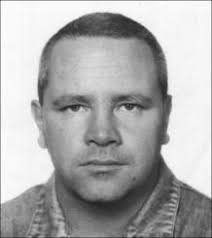
Subject Profile Photo

Wade John Frankum
Age: 33 // Part-Time Taxi Driver // Deceased

Perpetrator Profile & Pathological Isolation

Wade John Frankum was a 33-year-old part-time taxi driver who lived a deeply isolated, unremarkable life in a small apartment in Sydney’s inner west. Outwardly described as quiet and unassuming, Frankum hid a severe, deteriorating mental state marked by violent, obsessive fantasies, extreme alienation, and a hyper-fixation on survivalist and military culture. Following the tragic suicide of his mother years prior, his psychological stability unraveled completely, though he managed to hide his pathologically aggressive undercurrents from local licensing authorities.

Exploiting the loose regulatory gun laws of New South Wales at the time, Frankum easily obtained a standard shooter’s license and purchased a Chinese-manufactured SKS semi-automatic military rifle. The SKS, chambered in the high-velocity Soviet 7.62×39mm round, gave him immense destructive capability. In his apartment, investigators later recovered extensive shelves packed with violent literature, tactical gear, and a massive stockpile of ammunition boxes, showing a long-standing, clinical preparation for an indiscriminate mass casualty event.

Frankum selected the bustling Strathfield Plaza shopping center, located in Sydney’s inner western suburb of Strathfield, for his target. The plaza served as a primary suburban transportation hub, connected directly to a major railway station. On a busy Saturday afternoon, it was packed with hundreds of weekend shoppers, families, and diners, providing a high-density environment that left civilian targets entirely trapped.

The Plaza Siege Chronology: August 17, 1991

**13:00 AEST // The Initial Coffee Shop Incursion:** Frankum arrived at Strathfield Plaza carrying a large blue sports bag that concealed his loaded SKS rifle. He walked calmly up to The Coffee Pot cafe on the upper tier, sat down alone, and ordered a coffee. For roughly forty-five minutes, he sat quietly in his seat, surrounded by bustling tables of families and young students, showing no outward indicators of psychological agitation.

**13:45 AEST // Outbreak of the Assault:** Suddenly, without warning or verbal provocation, Frankum stood up, drew a large Bowie knife from his gear, and stabbed a nearby teenage patron sitting at an adjacent table. As patrons shrieked in shock, assuming an isolated brawl was unfolding, Frankum dropped the knife, unzipped his sports bag, pulled out the SKS rifle, and opened fire into the tight cafe layout at point-blank range, killing several diners instantly.

**13:50 AEST // The Shopping Mall Sweep:** Leaving behind a scene of absolute destruction in the cafe, Frankum walked out into the main mall thoroughfares. Moving with methodical composure, he fired his high-velocity rifle at fleeing shoppers, utilizing the long sightlines of the plaza corridors to pick off targets. He reloaded his rifle fluidly, sending echoes of military fire across the concrete building structure, causing widespread panic as shops slammed down their security steel shutters to shield desperate hiding patrons.

**13:55 AEST // Escalator Descent and Car Park Siege:** Frankum rode the central escalator down toward the ground floor, continuing to fire downward at targets below him. He exited the main building doors into the exterior rooftop car park area. There, he intercepted a young woman who was walking toward her parked vehicle, executing her at close range before attempting to hijack an approaching car to facilitate an escape.

**14:00 AEST // Perimeter Cornering & Termination:** Heavily armed tactical units from the New South Wales Police Force flooded the plaza grounds, tracing the sharp cracks of the 7.62mm ammunition. Realizing that sirens were closing in rapidly from all sides and that his operational mobility was completely neutralized in the open lot, Frankum leaned back against a parked vehicle, placed the barrel of the SKS rifle under his jaw, and fired a final, self-inflicted shot, terminating his life as police teams breached the deck.

Forensic Analysis & Clinical Casualties

The post-incident forensic investigation highlighted the extreme kinetic energy of the weapon used, noting that the SKS rifle’s military rounds easily pierced the mall’s internal partition walls and glass storefronts, generating lethal secondary shrapnel fields. Ballistics teams recovered dozens of spent shell casings scattered from the upper cafe down to the vehicle decks. In total, Frankum executed 7 innocent civilians, while an additional 6 individuals sustained severe, life-altering ballistic trauma that required intensive, long-term emergency surgical triage.

The sudden, high-density attack on a familiar suburban shopping hub deeply fractured the Australian public’s sense of domestic safety, placing intense scrutiny on the ease with which private citizens could stockpile military-grade firearms.

The Legislative Domino: The Precursor to Australia’s National Firearms Agreement

Historically, the Strathfield Plaza massacre stands alongside the 1987 Hoddle Street and Queen Street shootings as a vital legislative turning point in the South Pacific. Following the incident, the New South Wales state government enacted immediate emergency amendments, banning high-capacity semi-automatic centerfire rifles and establishing stricter storage and mental health vetting frameworks for all prospective firearms applicants.

These localized reforms served as the foundational legal blueprint for the comprehensive national policy overhaul that followed years later. When the catastrophic Port Arthur massacre occurred in Tasmania in 1996, the structural arguments first brought to light by the Strathfield tragedy enabled Prime Minister John Howard to rapidly consolidate political support and enact the historic **1996 National Firearms Agreement (NFA)**. This sweeping federal legislation established a total nationwide ban on all semi-automatic rifles and pump-action shotguns, implementing a massive mandatory federal buyback scheme that permanently reshaped Australia’s modern sociological profile.

Complete Verified Casualty & Victim Registry

The official verified registry of the 7 innocent lives taken during the Strathfield Plaza assault on August 17, 1991:

• Roberta Armstrong (Age 65, Dedicated Community Volunteer)
• Robertson Keegel (Age 54, Loving Husband & Father)
• Patricia Kustera (Age 45, Devoted Mother)
• Carole McCarthy (Age 45, Local Retail Staff)
• Joyce McGowan (Age 65, Respected Local Resident)
• Vassa_Angelogiannis (Age 44, Beloved Family Member)
• Greg Read (Age 41, Heroic Protector / Navy Veteran)