ROBERT FRANCIS MONE
Shotgun / Axe / Blunt Force
Dundee & Carstairs, Scotland
Civilians / School Staff / Law Enforcement
1967 and 1976
4 Confirmed Homicides
INCARCERATED // ACTIVE SENTENCE
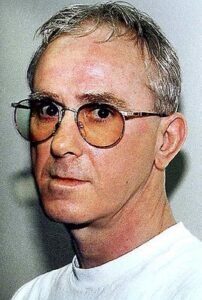
Robert Francis Mone was born in Dundee in 1948. His early developmental years were deeply marked by instability and trauma; he was bullied by his father and claimed to have been subjected to sexual abuse by a family friend at the age of 12. Following the death of his grandfather, Mone became depressed and went to reside with his grandmother.
In 1964, he was formally expelled from St John’s High School. He subsequently joined the Gordon Highlanders, serving with the British Army in Germany. His criminal psychological profile is heavily defined by revenge-seeking behaviors and militarized violence, initially attempting to exact retribution against his former school.
November 1, 1967 // Dundee School Siege: While absent without leave from his military unit, Mone entered St John’s High School armed with a shotgun. He held a classroom of 14- and 15-year-old girls and their pregnant teacher, Nanette Hanson, captive for 90 minutes. During this siege, Mone raped and sexually assaulted pupils before ultimately fatally shooting Hanson, who had calmly attempted to negotiate the children’s release.
November 30, 1976 // Carstairs Breakout: Having been confined to the State Hospital in Carstairs, Mone and his fellow patient and lover, Thomas McCulloch, executed a meticulously planned breakout. Over six months, they secretly gathered a rope ladder, weapons, and fake identification.
The Escalation of Force: During the escape, Mone and McCulloch murdered a fellow patient, Ian Simpson, and a nursing officer, Neil McLellan. After scaling the hospital’s barbed wire perimeter, they ambushed a police car, killing Constable George Taylor. The pair was finally apprehended near Carlisle after a high-speed chase and a violent vehicle crash on the M6 slip road.
- Exhibit A (The Siege Weaponry): A shotgun utilized during the 1967 hostage situation at the Dundee school.
- Exhibit B (The Escape Tools): A weighted rope ladder constructed to breach the Carstairs perimeter fence.
- Exhibit C (The Fireman’s Axe): An axe, originally secured in an administrative office for emergency fire protocol, was weaponized by the perpetrators during the hospital killings.
- Exhibit D (Vehicular Evidence): A stolen police Panda car, a subsequently hijacked van, and a farmer’s car were all utilized and abandoned during the violent flight south along the A74.
Mone’s modus operandi lacks the covert ritualistic elements typical of serial offenders, leaning instead towards overt, heavily militarized sieges and aggressive physical domination. His 1967 attack was characterized by the systemic terrorization of young, vulnerable schoolgirls and explicit demands to local authorities, demonstrating a motive rooted in retribution and psychological control.
By 1976, his violent profile had evolved to encompass highly organized, collaborative lethality. Alongside McCulloch, he displayed a complete disregard for human life, bludgeoning hospital staff and patients, and executing a police officer to facilitate their escape, showcasing a purely tactical, obstacle-clearing approach to violence.
- Physicality: Born in Dundee in 1948, identifying as a local to the initial crime scene area.
- Background: Possessed formal military training as a former soldier in the Gordon Highlanders.
- Criminal Classification: Initially found insane and unfit to plead for the 1967 murders, resulting in his psychiatric confinement.
- Incarceration Activity: Currently ranks as Scotland’s longest-serving prisoner; has reportedly spent his confinement studying law and philosophy, as well as transcribing materials into Braille.
Thomas McCulloch: Mone’s primary accomplice and lover during the 1976 breakout. McCulloch was admitted to Carstairs after shooting two restaurant employees over a dispute regarding a bread roll. Following the 1976 escape, he pleaded guilty to all three murders and was sentenced to life imprisonment. He was eventually released in 2013.
Robert Christopher “Sonny” Mone: Mone’s father, who exhibited his own homicidal pathology. Following his son’s initial conviction, Sonny Mone murdered his aunt and two other women in Dundee. He was later stabbed to death by a fellow inmate in 1983 while serving his own life sentence.
Mone’s crimes left deep scars on both the Dundee community and the Scottish justice system. The 1967 school shooting led to Nanette Hanson posthumously receiving the Albert Medal for her profound bravery. The 1976 Carstairs incident exposed fatal flaws in the security protocols of state psychiatric facilities, prompting a swift independent parliamentary inquiry to prevent future bloodshed.
Mone pleaded guilty to the murder of PC Taylor in 1977 and remains incarcerated today at Glenochil Prison. In 2007, an attempt to integrate him via day release was met with intense political and public backlash, with survivors fiercely arguing against his freedom. Following security fears in 2008, he was returned to high security.
The individuals who lost their lives to Robert Mone (and accomplice Thomas McCulloch) across two separate mass casualty incidents:
| Victim Name | Date |
|---|---|
| Nanette Hanson | November 1, 1967 |
| Ian Simpson | November 30, 1976 |
| Neil McLellan | November 30, 1976 |
| PC George Taylor | November 30, 1976 |