MARTIN BRYANT
Semi-automatic Rifles (Colt AR-15 / L1A1 SLR)
Port Arthur, Tasmania, Australia
Tourists & Local Residents (Indiscriminate)
April 28–29, 1996
35 Confirmed Homicides (23 Injured)
INCARCERATED // LIFE WITHOUT PAROLE
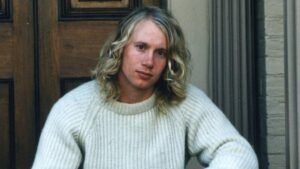 Martin Bryant
Martin Bryant was a 28-year-old local with a lifelong history of severe behavioral issues, profound social isolation, and an exceptionally low IQ (estimated at 66). Psychiatrists had previously noted his lack of empathy and unpredictable nature. His descent into catastrophic violence was heavily catalyzed by sudden, immense wealth. Following the death of his eccentric, wealthy friend Helen Harvey in a car crash (which Bryant survived and was suspected of causing), and the subsequent suicide of his father, Bryant inherited over half a million dollars. He utilized this fortune to travel extensively and stockpile high-powered firearms without regulatory friction.
Bryant’s pathology was rooted in deep, festering grievances and a desperate desire for infamy. A specific focal point of his anger was the Seascape guesthouse. His father had desperately wanted to purchase the property but lost it to another couple, David and Noelene Martin. Bryant irrationally blamed the Martins for his father’s subsequent depression and death, establishing Seascape as the geographical and psychological epicenter of his planned massacre.
April 28, 11:45 a.m. // The Seascape Murders: Bryant drove to the Seascape guesthouse in a yellow Volvo equipped with a surfboard on the roof. He entered the property and murdered the owners, David and Noelene Martin, securing the location for his eventual retreat.
1:30 p.m. // The Broad Arrow Cafe: Bryant arrived at the Port Arthur historic site, entering the crowded Broad Arrow Cafe carrying a large blue tennis bag. After finishing a meal, he unzipped the bag, retrieved a Colt AR-15 SP1 Carbine, and opened fire. In approximately 90 seconds, firing from the hip, he killed 20 people and wounded 12 others in a brutally efficient close-quarters slaughter.
1:45 p.m. // Parking Lot & Toll Booth: Exiting the cafe, Bryant continued his rampage through the parking lot and bus parking area, killing several more. Driving away in his Volvo, he stopped at the site’s toll booth, executing a mother and her two young children (the Mikac family) in one of the most horrifying moments of the tragedy. He then hijacked a BMW, taking the driver, Glenn Pears, as a hostage.
April 28–29 // The Siege: Bryant returned to the Seascape guesthouse with his hostage. A grueling 18-hour standoff with the Special Operations Group ensued. The siege ended on the morning of April 29 when Bryant set the guesthouse on fire, running out of the burning building with his clothes alight. Police later discovered the remains of the Martins and the murdered hostage, Glenn Pears, inside.
- Exhibit A (The Arsenal): A Colt AR-15 SP1 Carbine (fitted with a Colt scope) and an L1A1 Self-Loading Rifle (SLR). Bryant was able to purchase these high-capacity weapons legally without a background check or registration under the lax laws of the era.
- Exhibit B (The Blue Tennis Bag): A crucial piece of operational equipment used to conceal the AR-15 and massive amounts of ammunition as he bypassed the historical site’s entrance and walked into the cafe.
- Exhibit C (The Yellow Volvo): The distinct 1977 Volvo 244 used by Bryant to travel between kill zones, abandoned at the toll booth in favor of the hijacked BMW.
- Exhibit D (The Seascape Guesthouse): The origin point of his grievance, the site of the first murders, and the barricaded fortress where the massacre concluded in an arson fire.
Despite lacking formal military or police training, Bryant exhibited a terrifyingly lethal close-quarters methodology inside the Broad Arrow Cafe. He fired rapidly from the hip, pointing rather than aiming, utilizing the devastating kinetic energy of 5.56×45mm rounds in a confined, echoing space to overwhelm and instantly incapacitate victims.
His M.O. outside the cafe transitioned from static mass-casualty generation to mobile execution. He systematically utilized his vehicle to pursue fleeing targets and intercept unsuspecting arrivals at the toll booth. The final phase of his attack mirrored a classic siege mentality, returning to his primary psychological focal point (Seascape) to barricade himself, ensuring a highly publicized standoff with tactical police units.
- Physicality & Demeanor: A 28-year-old male with long blonde hair. During police interviews following his arrest, he displayed a chillingly juvenile demeanor, repeatedly laughing, denying involvement despite overwhelming evidence, and asking how many people he had killed to gauge his level of infamy.
- Legal Resolution: To spare the survivors and victims’ families the trauma of a trial, Bryant’s defense team convinced him to plead guilty to all 72 charges, including 35 counts of murder.
- Custodial Status: He was sentenced to 35 life sentences plus 1,036 years without the possibility of parole. He remains incarcerated in the maximum-security Risdon Prison in Hobart, kept largely in solitary confinement for his own protection from other inmates.
The Port Arthur Massacre was the catalyst for one of the most rapid and comprehensive overhauls of firearms legislation in global history. Just 12 days after the massacre, then-Prime Minister John Howard engineered a bipartisan political consensus to implement the National Firearms Agreement (NFA).
The NFA effectively banned fully automatic and semi-automatic firearms, as well as pump-action shotguns. It established a nationwide registry, imposed strict background checks, required a “genuine reason” for owning a firearm (which explicitly excluded self-defense), and instituted a massive mandatory government buyback program that removed over 650,000 firearms from public circulation. The laws fundamentally shifted the culture of weapon ownership in Australia, resulting in a dramatic, sustained plunge in both firearm homicides and suicides.
A selection representing the 35 victims murdered by Martin Bryant, highlighting the indiscriminate targeting of tourists, local business owners, and children:
| Victim Name | Age | Location of Death |
|---|---|---|
| David Martin | 72 | Seascape Guesthouse |
| Noelene Martin | 54 | Seascape Guesthouse |
| Gwennee Neander | 67 | Broad Arrow Cafe |
| Kevin Sharp | 68 | Broad Arrow Cafe |
| Walter Bennett | 66 | Broad Arrow Cafe |
| Nanette Mikac | 36 | Toll Booth Area |
| Alannah Mikac | 6 | Toll Booth Area |
| Madeline Mikac | 3 | Toll Booth Area |
| Glenn Pears | 35 | Hostage (Killed at Seascape) |
| *Plus 26 additional victims | N/A | Across Port Arthur Site |