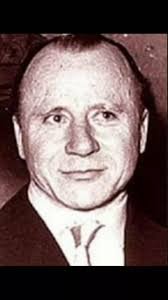
Paul Anthony Brumfitt possesses a deeply integrated history of criminal violence extending back to his adolescence in 1968. Displaying signs of a highly volatile explosive personality matrix, his early path lines included multiple convictions for severe physical wounding and weapon offenses. In 1979, an internal personal dispute served as the primary psychological trigger for a destructive multi-day fugue state that bridged international borders.
Following his original 1980 conviction at the Old Bailey, psychiatric experts categorized Brumfitt as suffering from complex personality disorders alongside distinct diagnostic anomalies. Despite a judicial order specifying three simultaneous life sentences, a determination by institutional medical advisors in late 1994 declared him cleared of public threat criteria, a calculation that catastrophic tracking errors would subsequently expose as invalid.
Brumfitt’s initial operational baseline relied on immediate manual dominance. During his 1979 panic spree, he used blunt force and rapid throat closure to overpower a shop owner in Tilbury before immediately board-routing a ferry link into Southern Denmark, where he executed an Esbjerg transit operator using identical physical constraints within days of arrival.
Upon his parole integration into the West Midlands in 1994, Brumfitt completely altered his target pool to exploit street-level sex workers in localized red-light zones, hiding his movements entirely from his probation supervisor. His 1999 methodology escalated into heavy physical concealment. After luring victims to an isolated flat in Woodsetton, he executed them, transported the remains to an industrial scrap yard on Cooper Street, and utilized accelerants to perform systematic thermal destruction, intending to entirely eliminate structural and genetic identification markers.
- The Archaeological Grid: Following Brumfitt’s eventual arrest, West Midlands Police deployed specialist forensic anthropologists and archaeologists to painstakingly excavate the ash layers of a commercial yard firepit in Wolverhampton.
- Osteological Extraction: Investigators recovered a series of highly fragmented, charred skeletal shards that had survived the extreme thermal treatment, preventing traditional immediate post-mortem profiling.
- The Hardware Link: Found directly fused within the dense ash matrix alongside the bone shards was a highly specific, unburned item: a small bunch of keys. Forensic technicians matched these keys to locks belonging to the missing victim, Marcella Davis, which, alongside microscopic dental record cross-matching, delivered definitive forensic proof of her destruction.
July 5, 1979 // Sidney Samuel: Brumfitt strangles a 59-year-old shop operator inside an Essex commercial property during a sudden escalation.
July 1979 // The Denmark Transit: Fleeing by ferry via the continent, Brumfitt manually chokes 40-year-old bus driver Teddy Laustrup to death in Esbjerg before international containment units execute an arrest.
August 1980 // The Old Bailey Judgment: Pleading guilty to manslaughter via diminished responsibility parameters, Brumfitt receives three lifetime sentences.
“>November 1994 // System Parole Release: Following a favorable psychiatric reassessment panel, Brumfitt receives conditional release, obtaining work via Dudley Council infrastructure programs.
February 7, 1999 // Marcella Davis: Brumfitt targets and executes 19-year-old commercial worker Marcella Davis, dismembering and burning her remains in a secluded scrap plot.
February–March 1999 // Active Serial Assaults: While the search for Davis is active, Brumfitt executes multiple armed knife-point rapes against other commercial workers across Wolverhampton.
July 20, 2000 // Permanent Re-Sentencing: Birmingham Crown Court convicts Brumfitt of murder and serial rape, applying three consecutive life orders and permanently ending his freedom track.
The secondary conviction of Paul Brumfitt triggered an immediate institutional crisis within the UK Home Office and Parole structures. West Midlands Chief Constable Edward Crew issued a stinging public indictment of the prison service, calling it entirely “inconceivable” that a dangerous individual with a documented history of cross-border homicides could be granted unmonitored freedom among vulnerable metropolitan target pools.
The intense political fallout, led by members of parliament, directly forced the Prison and Probation Services to implement a major structural overhaul of the lifecycle risk review architecture. These legislative changes placed significantly higher diagnostic and supervisory burdens on all life-licence releases, specifically stripping back standard release options for individuals whose criminal baseline profiles exhibited extreme recurrent sexual violence.
| Victim Name | Date | Context of Fatality |
|---|---|---|
| Sidney Samuel (59) | July 5, 1979 | Strangled inside his commercial shop location in Tilbury, Essex, following an explosive confrontation. |
| Teddy Laustrup (40) | July 1979 | Danish bus driver targeted and strangled to death in Esbjerg, Denmark, during the perpetrator’s flight from UK authorities. |
| Marcella Ann Davis (19) | February 7, 1999 | Street commercial worker targeted in Wolverhampton. Remains were dismembered and subjected to severe thermal destruction. |