Institutional Diet Log // Case Record
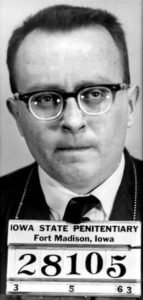
Victor Feguer
Documentation of the highly symbolic single olive pit anomaly and the final federal execution log of Iowa history.
Case Overview

Victor Feguer was a drifter who arrived in Dubuque, Iowa, in the summer of 1960. Soon after his arrival, Feguer began calling local physicians in alphabetical order, eventually reaching Dr. Edward Bartels. Feguer falsely claimed a woman needed urgent medical attention, luring Dr. Bartels into an ambush where he kidnapped and executed him in an isolated cornfield.

Feguer was prosecuted under federal kidnapping laws and sentenced to death by hanging. His execution on March 15, 1963, carried significant historic weight as it stood as the final federal execution carried out in the United States prior to the modern post-Furman death penalty moratorium era.

Culinary Specification & Request Log

Feguer completely rejected standard, rich multi-course menu requests, instead issuing a highly minimalist order that initially confused kitchen staff:

[01] One singular, uncooked black olive with the pit still inside.
The Olive Pit Symbolic Anomaly

Feguer consumed the single olive calmly inside his holding cell. Following his execution by hanging at the Iowa State Penitentiary, correctional medical officers performing standard post-mortem administrative routines discovered the singular black olive pit tucked safely inside the pocket of his burial suit.

Prior to the execution, Feguer had quietly expressed to guards his hope that an olive tree—historically recognized as a global symbol of peace—would grow directly from his remains to make amends for his crime. In behavioral and psychological profiling archives, this case stands as the premier example of symbolic, ritualistic food utilization in modern prison histories.

Institutional Profile
Federal ID Num: #7358-C
Jurisdiction: Federal (Iowa, USA)
Conviction: Kidnapping & Murder
Execution Method: Hanging
Execution Date: March 15, 1963
Log Classification: SYMBOLIC MINIMALISM