CHRISTIAN DORNIER
12-Gauge Double-Barreled Shotgun
Luxiol, Doubs, France
Family Members & Random Civilians
July 12, 1989
14 Confirmed Homicides (8 Injured)
INSTITUTIONALIZED // NOT GUILTY BY INSANITY
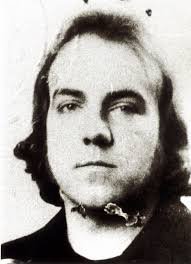
Christian Dornier was a 31-year-old farmer living in Luxiol whose psychological stability drastically eroded one and a half years prior to the massacre. Following a decision by his father not to hand over the family farm to him, Dornier suffered a profound collapse in his mental health. He abandoned his agricultural responsibilities, shaved his head, began smoking heavily, and displayed increasingly violent tendencies.
Three months before the incident, he purchased a Volkswagen Golf GTI, signaling a desire to acquire the mobility to leave the farm at will. By July 1989, his condition culminated in a severe nervous breakdown. He entirely isolated himself, notably refusing to attend his own sister’s wedding on July 8, instead spending the day aimlessly driving through the countryside.
14:30 // The Farmhouse Assault: Dornier refused to join his family for lunch. Waiting in the kitchen where he had previously hidden a double-barreled shotgun, he commenced his attack when Marcel Lechine, a cattle inseminator, entered the house. Dornier fatally shot him, seemingly mistaking him for his brother Serge. He then executed his sister Corinne at point-blank range, wounded his father in the neck, and pursued him to a neighbor’s property to shoot him again. He returned to the farmhouse, fatally shooting his mother as she desperately attempted to call the police.
14:40 // The Vehicular Rampage: Leaving his brother-in-law (who escaped through a bathroom window) unharmed, Dornier packed additional ammunition, entered his Volkswagen Golf GTI, and drove into the surrounding area. He murdered a 10-year-old boy, Yoan Robez-Masson, and his adopted brother Johnny as they rode their bicycles.
14:45 – 15:00 // Expanding the Kill Zone: Operating with high mobility, Dornier fired at targets from distances of up to 300 meters. He killed multiple elderly villagers, including Stanislas and Marie Périard, and fired directly into nearby homes, wounding several people standing in their own kitchens.
15:00 // The Apprehension: The approximately 30-minute rampage ended when law enforcement intercepted Dornier. He was shot in the stomach by police and subsequently captured alive, suffering from apparent memory loss at the time of his arrest.
- Exhibit A (The Murder Weapon): A 12-gauge double-barreled shotgun, which had been previously discovered by his brother-in-law but was mistakenly dismissed as having been stored there by Dornier’s father.
- Exhibit B (The Volkswagen Golf GTI): The primary mechanism for the spree’s expansion. The vehicle enabled him to transition a domestic murder into a mass casualty event spread across the village.
- Exhibit C (Psychiatric Assessments): Forensic psychiatric evaluations confirmed that Dornier was suffering from a severe psychotic break and was legally insane at the time of the killings, fundamentally altering the trajectory of the criminal case.
Dornier’s modus operandi displays a rapid structural shift from targeted, grievance-based violence (against his immediate family and perceived local interlopers) to an indiscriminate, chaotic spree. He utilized a weapon that lacked the high capacity of modern assault rifles but compensated for it with vehicular mobility and a sprawling, open environment.
His forensic signature included utilizing the extreme range capabilities of his environment, indiscriminately firing at local residents from distances that made immediate cover or defensive responses nearly impossible for his civilian targets.
- Physicality & Demeanor: A 31-year-old farmer whose physical appearance was marked by a recently shaved head—a physical manifestation of his internal psychological fracture.
- Legal Resolution: Under the French legal framework, his diagnosed insanity resulted in a “non-lieu” (no case to answer), rendering him immune to criminal prosecution despite the demands of the victims’ families.
- Custodial Status: Following the massacre, Dornier was committed to the high-security Unité Malades Difficiles (UMD) psychiatric hospital in Sarreguemines for indefinite confinement, where he remained under constant surveillance.
The Luxiol shooting stands as one of the deadliest mass casualty events in modern French history. The sheer magnitude of the slaughter prompted direct condolences from then-Prime Minister Michel Rocard.
The judicial resolution of the case generated profound, enduring controversy. The fact that an offender responsible for 14 deaths could evade a formal criminal trial due to insanity deeply alienated the surviving community members. The tragedy catalyzed intense public discourse in France regarding the balance between psychiatric care, legal accountability, and the rights of victims’ families following mass killings driven by severe mental illness.
A selection representing the 14 victims murdered by Christian Dornier during the 35-minute rampage:
| Victim Name | Age | Relationship / Notes |
|---|---|---|
| Jeanne Dornier | 57 | Mother (Farmhouse) |
| Corinne Dornier | 26 | Sister (Farmhouse) |
| Marcel Lechine | 45 | Cattle Inseminator (Farmhouse) |
| Yoan Robez-Masson | 10 | Passerby (Shot while on bicycle) |
| Pauline Faivre-Pierret | 5 | Passerby |
| Louis Cuenot | 67 | Neighbor |
| Marie Périard | 81 | Neighbor |
| Stanislas Périard | 79 | Neighbor |
| *Plus 6 additional victims | N/A | Across Luxiol |