Incident Report // Comprehensive Forensic Dossier
The Luby’s Cafeteria Massacre
An exhaustive operational reconstruction of the 1991 Killeen, Texas vehicular breach and active shooter assault, the forensic analysis of close-range handgun deployment, and the subsequent paradigm shift in American concealed carry legislation.

📋 Forensic Case Profile Ledger
Perpetrator:
George Hennard (Age 35)
Weapon Profile:
Glock 17 & Ruger P89 Semi-Automatic Pistols (9×19mm)
Location:
Luby’s Cafeteria, Killeen, Texas
Target Focus:
PUBLIC COMMERCIAL INFRASTRUCTURE / MISOGYNISTIC FOCUS
Incident Date:
October 16, 1991 (c. 12:39 CDT)
Fatalities:
23 Total (Civilians)
Survivors:
27 Wounded / Dozens Traumatized
Final Outcome:
PERPETRATOR SUICIDE FOLLOWING POLICE ENGAGEMENT
Tactical Note: The perpetrator maximized structural shock by using his pickup truck as a kinetic battering ram, smashing completely through the glass storefront windows to create immediate entry access.

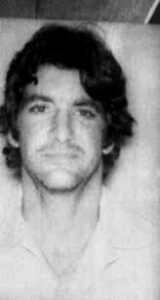
Subject Profile Photo

George Hennard
Age: 35 // Unemployed Merchant Mariner // Deceased

Deep Perpetrator Profile & Pathological Aggression Vector

George Hennard was a 35-year-old unemployed merchant mariner who had been suspended from maritime operations due to structural drug infractions and highly erratic behavioral outbursts. Living in an isolated, deeply hostile psychological state in Belton, Texas, Hennard exhibited a profound, documented history of severe anti-social behavior, paranoid ideation, and intense misogyny. He frequently directed verbal abuse and erratic correspondence toward local women, whom he obsessively vilified in personal journals.

In the days leading up to the attack, Hennard’s psychological framework disintegrated completely. He legally purchased two high-capacity 9mm semi-automatic handguns—a Glock 17 and a Ruger P89—along with hundreds of rounds of ammunition from a local licensed dealer. Driven by deep ideological malice, he meticulously planned an assault targeting a civilian hub during a high-density operational window, selecting National Boss’s Day to strike a busy family establishment.

His target choice was the Luby’s Cafeteria located in nearby Killeen, Texas, situated adjacent to the major military hub of Fort Hood. The venue was at maximum capacity with roughly 150 lunchtime patrons when Hennard initiated his tactical approach, deliberately exploiting a crowded commercial environment to guarantee a high concentration of defenseless targets.

The Chronology of the Cafeteria Incursion: October 16, 1991

**12:39 PM // Kinetic Vehicular Breach:** Hennard accelerated his 1987 Ford Ranger pickup truck directly through the front plate-glass window assembly of the restaurant. The vehicle traveled several feet inside the dining room, coming to an abrupt halt amidst crushed tables and structural debris. Diners initially assumed the crash was a catastrophic vehicular accident, rushing toward the truck cabin in an attempt to provide medical triage to the driver.

**12:41 PM // Active Shooter Transition:** Hennard immediately exited the cab of the truck armed with both semi-automatic pistols. He executed a local patron who had approached to help, yelling anti-social and misogynistic taunts into the room. Moving methodically through the dining sectors, he began targeting individuals at point-blank range as they hid under tables or behind serving counters.

**12:45 PM // Systematic Execution Sweeps:** Hennard reloaded his 9mm magazines repeatedly, maintaining absolute control over the exit pathways. Witnesses detailed his calm, unhurried demeanor as he paced the room, explicitly singling out female patrons for execution while stepping over structural obstacles. In a desperate act of resistance, patron Tommy Vaughn kicked through a thick rear window panel, allowing roughly 30 to 40 terrified individuals to escape into the exterior parking lot corridor.

**12:51 PM // Law Enforcement Intervention:** Four local police officers arrived on site, initiating an immediate tactical entry. Armed with standard-issue revolvers, the officers engaged Hennard in a brief, high-intensity ballistic exchange. Outgunned but maintaining aggressive advancement, officers managed to wound Hennard multiple times, forcing him to retreat toward a rear alcove corridor near the restrooms.

**12:54 PM // Perimeter Containment & Suicide:** Realizing his mobility was completely compromised and that law enforcement vectors had secured all physical escape lanes, Hennard used his remaining ammunition to commit suicide via a self-inflicted ballistic shot to the head, ending the active assault exactly fifteen minutes after the initial vehicular breach.

Forensic Analysis & Tactical Aftermath

The post-incident forensic investigation confirmed that Hennard discharged over 100 rounds of 9mm ammunition inside the cafeteria. Crime scene technicians recovered dozens of spent casings scattered across the dining floor, noting that the vast majority of the lethal injuries were sustained at close range. Hennard’s calculated precision resulted in the execution of 23 innocent civilians, while an additional 27 individuals suffered varying degrees of ballistic or shrapnel-related trauma.

At the time of the incident, the attack stood as the deadliest mass shooting in modern United States history, profoundly shocking the national psyche and exposing critical vulnerabilities in public commercial infrastructure security and active shooter response timelines.

The Legislative Paradigm Shift: Suzanna Hupp & Texas CHL Reform

The Luby’s massacre acted as a profound, historic catalyst for gun control and concealed carry legislative reform across the United States. Among the survivors was Suzanna Gratia Hupp, whose parents, Al and Ursula Gratia, were both executed by Hennard during the assault. Hupp later testified before Congress and state legislatures that she had been forced to leave her personal handgun inside her vehicle prior to entering the restaurant, in strict compliance with the Texas state laws active at the time. She argued that this structural ban completely neutralized her ability to mount an effective self-defense action.

Driven by her experience, Hupp successfully campaigned for public office, winning a seat in the Texas House of Representatives. She spearheaded the drafting and passage of the **1995 Texas Concealed Handgun Law (CHL)**, which fundamentally transformed Texas into a “shall-issue” state for concealed firearms. This historic legislative shift triggered a massive domino effect across the country, prompting dozens of other US states to overhaul their respective regulatory models and establish broader legal frameworks for citizen-led self-defense.

Complete Verified Casualty & Victim Registry

The official verified registry of the 23 innocent lives taken during the Killeen cafeteria assault on October 16, 1991:

• Patricia Carney (Age 57)
• Jimmie Caruthers (Age 48)
• Kriemhild Davis (Age 62)
• Steven Ernst (Age 42)
• Al Gratia (Age 71)
• Ursula Gratia (Age 67)
• Thomas J. Jenkins (Age 32)
• Venice Ellen Henehan (Age 86)
• Clodine Humphrey (Age 63)
• Sylvia Mathers King (Age 56)
• Debra Gray (Age 33)
• Michael Griffith (Age 48)
• Juanita Mudlin (Age 56)
• Nancy Stansbury (Age 44)
• Olgard Wilson (Age 45)
• Ruth Pujol (Age 55)
• Glen Arval Spivey (Age 55)
• Natille Spivey (Age 51)
• Raymond Smart (Age 70)
• Lula Smart (Age 72)
• Lou Meyer Shultz (Age 40)
• Zonell Mingo (Age 70)
• Mary Turner (Age 46)