ROBERT RUSSELL CARD II
Semi-automatic Rifle (Ruger SFAR .308)
Lewiston, Maine, USA
Civilians / Recreational Patrons
October 25, 2023
18 Confirmed Homicides (13 Injured)
DECEASED // SUICIDE
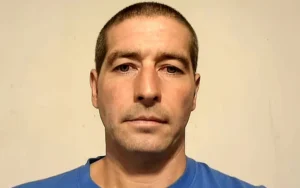 Robert Russell Card II
Robert Card was a 40-year-old Sergeant First Class in the U.S. Army Reserve, where he enlisted in 2002. During his military career, he served as a grenade instructor, exposing him to repeated blasts. In the months preceding the attack, his mental health declined drastically. He began to exhibit paranoid delusions, expressing false beliefs that businesses and people were spreading rumors about him.
In the summer of 2023, Card underwent a two-week psychiatric evaluation after acting erratically at an Army training facility in New York. He explicitly threatened to “shoot up” a military base, prompting a statewide awareness alert to local Maine police in mid-September. Post-mortem analysis of his brain tissue later revealed significant traumatic brain injuries (TBI) affecting his neural pathways, consistent with his history of blast exposure.
October 25, 6:54 p.m. // The Bowling Alley Assault: Card entered Just-In-Time Recreation (formerly Sparetime Recreation) during a youth bowling league event and opened fire. After firing a single shot, his rifle jammed. As he attempted to clear the malfunction, two patrons, Jason Walker and Michael Deslauriers II, charged him in a courageous effort to disarm him. Card successfully cleared the jam and killed both men, ultimately murdering seven people before fleeing just 45 seconds after he entered.
October 25, 7:07 p.m. // The Bar & Grille Massacre: Card arrived at Schemengees Bar & Grille, located approximately four miles south of the bowling alley. He entered the building and opened fire as he moved toward the cornhole section, where a tournament for the deaf community was taking place. Within 78 seconds, Card fired 36 rounds, killing eight people inside and one outside.
October 25–26 // The Manhunt: Following the attacks, the Lewiston Police Department shared surveillance footage of Card and a white vehicle of interest. Authorities later found Card’s white Subaru Outback abandoned at the Papermill Trail boat launch in Lisbon, Maine. This discovery initiated a massive 48-hour manhunt and prompted widespread shelter-in-place orders across multiple communities.
October 27, 7:45 p.m. // The Discovery: Tactical teams discovered Card’s body in a box truck at an overflow lot owned by Maine Recycling Corp, his former employer. The Maine Chief Medical Examiner determined he had died from a self-inflicted gunshot wound to the head, likely 8 to 12 hours prior to being found.
- Exhibit A (The Primary Weapon): Card utilized a Ruger SFAR semi-automatic rifle chambered in .308 Winchester. The weapon was equipped with an extended magazine, a flashlight, and an optic.
- Exhibit B (CCTV Surveillance): Security cameras at the bowling alley captured clear images of Card in a brown shirt and dark pants brandishing his rifle. These images allowed authorities to rapidly identify him.
- Exhibit C (Neurological Findings): Pathological analysis of Card’s brain tissue identified traumatic damage affecting his neural pathways. This provided critical forensic context to his rapid cognitive and psychiatric decline.
- Exhibit D (The Missed Warnings): Despite military superiors and family members reporting his paranoid delusions—and explicit threats to military bases—local police failed to disarm him after he refused to answer the door during a welfare check weeks before the shooting.
Card’s modus operandi was a highly mobile, tactically proficient “hit-and-run” active shooter assault. He minimized his time-on-target to extreme brevity, spending just 45 seconds inside the bowling alley and 78 seconds at the restaurant. This ensured he could inflict maximum casualties and escape long before the first police units arrived.
His forensic signature was the lethal utilization of his military firearms training under pressure. This was distinctly demonstrated when he calmly cleared a weapon malfunction while being actively charged by bystanders, allowing him to quickly resume his massacre without being subdued.
- Physicality & Background: A 40-year-old male and longtime resident of Bowdoin, Maine. He was physically capable due to his active military reserve status, having enlisted in the U.S. Army Reserve in December 2002.
- Institutional Failures: The incident highlighted profound systemic gaps in communication and intervention. Despite a psychiatric commitment and a statewide awareness alert sent to police regarding his threats, authorities did not invoke Maine’s “yellow flag” laws to confiscate his firearms.
- Custodial Resolution: Card was found deceased by suicide. He utilized a Smith & Wesson M&P .40-caliber pistol to end his own life while hiding in a commercial trailer.
The Lewiston shootings stand as the deadliest mass shooting in the history of Maine and the tenth-deadliest in United States history. The tragedy inflicted deep trauma on the state’s tightly knit communities, particularly devastating the local deaf community, which lost four members who were participating in a cornhole tournament at the bar.
The systemic failure to prevent the massacre catalyzed intense political and public scrutiny regarding the efficacy of existing “yellow flag” laws. It exposed critical communication breakdowns between military commands, psychiatric facilities, and local law enforcement, prompting widespread demands for stricter mental health intervention protocols to prevent future tragedies.
A selection representing the 18 victims murdered by Robert Card during the Lewiston rampage:
| Victim Name | Age | Relationship / Location |
|---|---|---|
| Robert E. Violette | 76 | Youth Coach (Just-In-Time Recreation) |
| Lucille M. Violette | 73 | Patron (Just-In-Time Recreation) |
| Aaron Young | 14 | Student (Just-In-Time Recreation) |
| William A. Young | 44 | Father (Just-In-Time Recreation) |
| Jason Adam Walker | 51 | Patron (Just-In-Time Recreation) |
| Michael R. Deslauriers II | 51 | Patron (Just-In-Time Recreation) |
| Tricia C. Asselin | 53 | Employee (Just-In-Time Recreation) |
| Joshua A. Seal | 36 | Interpreter (Schemengees Bar and Grille) |
| Peyton Brewer-Ross | 40 | Patron (Schemengees Bar and Grille) |
| Joseph Lawrence Walker | 57 | Bar Manager (Schemengees Bar and Grille) |
| *Plus 8 additional victims | N/A | Across both locations |