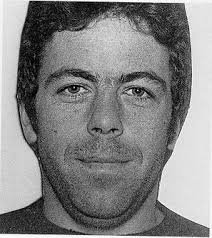
Lenny Murphy’s criminal personality was rooted in a profound, deep-seated identity crisis. Bearing the surname “Murphy” and the name “Hugh,” which phoneticized as “Hughes”—both common Catholic identifiers in Northern Ireland—he perceived his own identity as a vulnerability. This fueled a lifelong, performative purge of “impurity,” wherein he employed extreme, ritualized loyalist violence to insulate himself from suspicions of being a “closet Catholic.”
He managed his unit through a rigid, fear-based topology. He maintained a core circle of violent “knifemen” while delegating logistics (cabs, lookouts, safe houses) to peripheral associates who were kept largely unaware of the true extent of the atrocities. This compartmentalization served as his primary tactical defense against intelligence infiltration.
The Shankill Butchers’ abduction method utilized the ubiquitous “black taxi” network of Belfast. These vehicles were transformed into mobile surveillance and abduction platforms, patrolling the city at night to intercept lone pedestrians. By blending into the city’s legitimate transport infrastructure, Murphy could patrol Catholic-dominated areas without raising suspicion until the moment of abduction.
The gang utilized their access to local meat-packing facilities to source industrial-grade serrated butcher knives and axes. Forensic evidence from autopsies revealed the use of these heavy-duty implements to inflict deep, serrated lacerations that severed cervical vertebrae. This was not mere combat violence; it was pre-mortem ritualized butchery, designed to maximize terror and ensure that if any victim survived, the disfiguring anatomical impact would serve as a permanent community marker of the Butchers’ reach.
- The 1977 Survivor: The wall of silence was finally punctured in May 1977, when a victim successfully fought off his captors after a failed throat-slashing attempt. His survival allowed for the first accurate description of the “torture house,” providing the police with their first forensic entry point.
- The “Mr. X” Era: Between 1977 and 1979, the state held Murphy on lesser firearm charges. He was designated as “Mr. X” in court proceedings, as he had successfully liquidated or poisoned key witnesses (notably Mervyn Connor) to prevent any murder-level convictions during his first major incarceration.
- Jurisdictional Exploitation: Murphy deliberately dumped bodies on the borders of RUC police districts. This exploited the administrative breakdown between separate stations, ensuring that no single unit could consolidate the forensic pattern of knife-marks (the distinctive “zigzag” signature) for years.
| Victim Name | Date | Circumstances |
|---|---|---|
| Francis Rice | Feb 1976 | Abducted; autopsy confirms severe ritualized neck lacerations consistent with industrial blades. |
| Joseph Morrissey | March 1977 | Targeted due to gang rivalry; death caused by pre-mortem torture and knife trauma. |
| Stephen Ratleff | July 1977 | Final major victim of the gang’s peak operations phase before the 1979 collapse. |