MICHAEL ROBERT RYAN
Semi-Automatic Rifles (Type 56, M1 Carbine) / Handgun
Hungerford, Berkshire, England
Indiscriminate / Civilians / Police
August 19, 1987
16 Confirmed Homicides (15 Injured)
DECEASED // SUICIDE
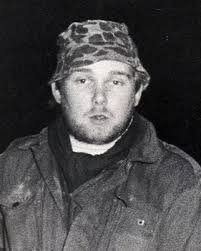
Michael Ryan was a 27-year-old unemployed laborer and antique dealer who lived with his mother in the quiet market town of Hungerford. A deeply reclusive and withdrawn individual, Ryan had no documented history of significant criminality or psychiatric treatment, making him virtually invisible to law enforcement radars. His life was intensely focused on a solitary obsession with firearms, military history, and survivalist fantasies.
Despite his lack of a formal military background, his membership in local gun clubs allowed him to exploit the highly permissive UK firearm laws of the 1980s. He legally amassed a highly lethal, military-grade arsenal. His descent into mass violence lacked a clear political manifesto or explicitly stated grievance; instead, it appeared to be a catastrophic psychological snap resulting in a nihilistic desire to inflict ultimate, indiscriminate destruction on his own community.
Midday // Savernake Forest: The spree initiated seven miles outside Hungerford. Ryan encountered 35-year-old Susan Godfrey, who was picnicking with her two young children. He abducted her at gunpoint, marched her into the woods, and executed her, leaving the toddlers unharmed.
12:45 p.m. // South View & The Matricide: Ryan drove his Vauxhall Astra to his home on South View, Hungerford. After a brief confrontation, he shot and killed his mother, Dorothy, along with the family dog. He systematically executed several neighbors, poured petrol around his house, set it ablaze, and began walking through the neighborhood equipped in a combat vest.
1:00 p.m. – 1:30 p.m. // Hungerford Common & Town Centre: Operating as a highly mobile active shooter, Ryan moved through the town and the adjacent common. He fired indiscriminately at passing vehicles and pedestrians. During this phase, PC Roger Brereton—one of the first responding officers—was ambushed and murdered inside his patrol car before he could call for adequate backup.
Suicide at John O’Gaunt School: Surrounded by heavily armed tactical units, Ryan eventually barricaded himself inside an empty classroom at his former school, John O’Gaunt. After a tense standoff and refusing to surrender, Ryan wrapped his assault rifle in a curtain to muffle the sound and shot himself in the head at approximately 19:45.
- Exhibit A (The Arsenal): Ryan utilized a Chinese Type 56 semi-automatic rifle (an AK-47 variant), a U.S. M1 carbine, and a Beretta 92FS 9mm pistol. All weapons and ammunition were fully licensed and legally held under his firearms certificate.
- Exhibit B (The Burned-Out Home): Ryan’s deliberate destruction of his own property at South View destroyed potential forensic evidence and indicated a fatalistic intention; he had no plan to survive the day’s events.
- Exhibit C (Police Communications Breakdown): The investigation highlighted catastrophic communications failures. Emergency phone lines in Hungerford collapsed under the volume of calls. Furthermore, police radios were ineffective due to the rural topography and incompatible radio frequencies between different emergency services.
Ryan’s modus operandi was a classic, highly destructive “spree killing.” Unlike a static mass shooter who holds a single location, Ryan remained constantly mobile over several miles, creating immense confusion and preventing early responders from pinning down his exact location. His movement from deep rural isolation to suburban streets maximizing targets of opportunity.
His forensic signature was marked by overwhelming firepower. He engaged civilian vehicles from a distance using the heavy kinetic impact of his Type 56 rifle, treating the town’s infrastructure as an urban combat zone. His attire (combat vest) and final decision to barricade himself inside his former secondary school underscored a deeply ingrained, warped militaristic fantasy.
- Physicality & Demeanor: A 27-year-old male, calmly walking through the streets of his own town. Witnesses reported him firing steadily and without emotion, reloading his weapons with practiced efficiency.
- Institutional Awareness: He was a known entity only to local gun clubs and the police licensing department. His rapid radicalization into violence went entirely unflagged by psychiatric or social services.
- Custodial Resolution: Deceased at the scene by a self-inflicted gunshot wound. His final words to police negotiators over a radio link were an apology to his mother, whom he claimed he didn’t mean to kill, cementing the profound psychological dissonance of his actions.
The Hungerford Massacre permanently altered the legislative and tactical landscape of the United Kingdom. Prior to 1987, ordinary police officers in the UK were completely unequipped to handle an active shooter wielding military-grade assault rifles. The tragedy directly precipitated the creation and nationwide deployment of Armed Response Vehicles (ARVs), ensuring that specialized, armed tactical officers were constantly on patrol rather than waiting at a central armory.
Legislatively, the massacre resulted in the swift passage of the Firearms (Amendment) Act 1988. The law strictly prohibited the ownership of all semi-automatic and pump-action centre-fire rifles, restricted the use of shotguns with a magazine capacity of more than two rounds, and mandated far more rigorous background checks, forever closing the loopholes that Ryan had exploited.
A representative selection highlighting the 16 innocent victims murdered by Michael Ryan during the spree across Hungerford:
| Victim Name | Age | Location of Death |
|---|---|---|
| Susan Godfrey | 35 | Savernake Forest |
| Dorothy Ryan | 60 | South View (Mother) |
| PC Roger Brereton | 41 | Hungerford Common (Police Officer) |
| George White | 54 | South View (Vehicle) |
| Abdul Rahman Khan | 84 | South View |
| Kenneth Clements | 51 | Hungerford Common |
| *Plus 10 additional victims | N/A | Across Hungerford |