JULIAN KNIGHT
M14 Rifle / Ruger 10/22 / Mossberg Shotgun
Clifton Hill, Melbourne, Victoria, Australia
Passing Vehicles & Pedestrians (Indiscriminate)
August 9, 1987
7 Confirmed Homicides (19 Injured)
INCARCERATED // LEGISLATIVE LIFE SENTENCE
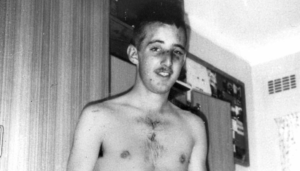 Julian Knight
Julian Knight was a 19-year-old former army cadet whose entire identity was deeply entwined with a militaristic fantasy. He possessed a lifelong obsession with warfare, weapons, and military strategy. Despite gaining entry to the prestigious Royal Military College, Duntroon, his dream rapidly unraveled. Knight proved entirely unsuited for military discipline, frequently clashing with superiors and peers.
Just 16 days prior to the massacre, Knight was discharged from Duntroon while facing serious criminal charges for stabbing a sergeant during a nightclub altercation. Stripped of his military future, facing a shattered relationship with his girlfriend, and experiencing severe financial and personal distress (his car had broken down on the night of the shooting), his psychological state collapsed. He sought to reclaim his lost “warrior” identity by projecting a battlefield onto the civilian streets of Melbourne.
9:30 p.m. // The Ambush Begins: Heavily intoxicated after a drinking binge, Knight returned to his Clifton Hill home, retrieved his legal firearms and hundreds of rounds of ammunition, and took up a concealed firing position near the intersection of Hoddle Street and Ramsden Street. He began firing semi-automatic bursts into passing vehicles.
9:35 p.m. – 10:15 p.m. // The “Combat” Zone: For 45 minutes, Knight treated Hoddle Street as a free-fire zone. The heavy 7.62mm rounds of his M14 rifle easily penetrated vehicle doors and engine blocks. Panicked motorists crashed or abandoned their cars, while responding police—equipped only with standard .38 caliber revolvers—were immediately pinned down by superior firepower. Knight fired at the arriving police helicopter (Air 495), forcing it to take evasive action.
10:15 p.m. // The Surrender: Exhausting his heavy ammunition, Knight retreated down a nearby alleyway onto Fitzroy Street, engaging in a brief, frantic shootout with pursuing police. After firing his final shotgun shell, he discarded his weapon, stepped out of hiding, and surrendered peacefully, explicitly demanding to be treated as a “Prisoner of War.”
- Exhibit A (The Arsenal): A Springfield M1A (civilian M14) 7.62mm rifle, a Ruger 10/22 .22 caliber semi-automatic rifle, and a Mossberg 12-gauge pump-action shotgun. All were legally owned and registered to Knight.
- Exhibit B (The Topography): Hoddle Street is a multi-lane arterial road. Knight utilized the darkness, the tree line, and elevated railway embankments to conceal his muzzle flashes, making it nearly impossible for victims and early police responders to locate the origin of the gunfire.
- Exhibit C (The Confession): Knight yielded a comprehensive, remorseless confession to detectives, analyzing his own shooting performance and discussing the event strictly in tactical military terms.
Knight’s methodology was a direct enactment of a sniper ambush. He exhibited tactical weapon transitioning; he utilized the heavy M14 for long-range target penetration (vehicles) and switched to the shotgun for close-quarters engagement when a police vehicle approached his position.
The ritualistic element of the crime was its pure theater. Knight was not targeting anyone he knew; he was targeting the concept of “the enemy.” By surrendering peacefully and requesting POW status once out of ammunition, he completed his psychological narrative: the disgraced cadet had finally seen combat.
- Physicality & Demeanor: A 19-year-old male of slight build. Upon his arrest, he was remarkably calm, compliant, and deeply interested in the tactical response deployed against him.
- Psychiatric Evaluation: Evaluators diagnosed him with severe narcissistic and borderline personality disorders, but he was deemed entirely legally sane and fit to stand trial. He pleaded guilty to all charges.
- Custodial Resolution: Initially sentenced to life imprisonment with a minimum non-parole period of 27 years. However, in 2014, as his parole date approached, the Victorian Government passed the extraordinary Corrections Amendment (Parole) Act 2014, specifically designed to ensure Knight is never released unless he is in imminent danger of dying or is severely incapacitated. He has also been officially declared a vexatious litigant due to his relentless, frivolous lawsuits from behind bars.
The Hoddle Street Massacre (followed closely by the Queen Street Massacre later that same year) caused a profound shock to the state of Victoria. It drastically exposed the vulnerability of standard patrol police, who were trapped behind engine blocks with six-shot revolvers while facing high-capacity military rifles. This directly accelerated the modernization of police armories and the expansion of specialized tactical units.
Furthermore, the tragedy acted as the initial catalyst for the tightening of Australian gun laws. While the 1996 Port Arthur Massacre would ultimately bring about sweeping national reform, Hoddle Street forced the immediate closure of loopholes in Victoria that allowed a 19-year-old civilian to legally purchase and stockpile combat weaponry and ammunition.
The seven innocent civilians murdered by Julian Knight as they drove or walked along Hoddle Street:
| Victim Name | Age | Location of Death |
|---|---|---|
| Tracey Skinner | 23 | Hoddle Street (Vehicle) |
| Kenneth O’Donnell | 26 | Hoddle Street (Vehicle) |
| Robert Mitchell | 27 | Hoddle Street (Vehicle) |
| John Muscat | 26 | Hoddle Street (Vehicle) |
| Gina Papa | 21 | Hoddle Street (Pedestrian/Passenger) |
| Dusan Flajnik | 53 | Hoddle Street (Vehicle) |
| Wayne Barentsen | 29 | Hoddle Street (Vehicle) |
Note: An additional 19 individuals sustained serious gunshot wounds and fragmentation injuries during the 45-minute siege.