HAROLD FREDERICK SHIPMAN
Lethal Injection (Diamorphine)
Greater Manchester, England
Elderly Patients (Primarily Women)
1975–1998
15 Convicted (Est. 250 Total)
DECEASED // CLOSED
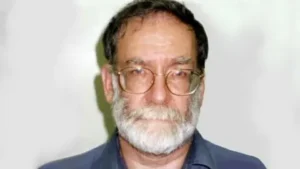 Harold Shipman
Harold Frederick Shipman was an outwardly respectable, highly trusted General Practitioner (GP) operating primarily in Hyde, Greater Manchester. His psychological descent began early in his medical career. In 1975, he was caught forging prescriptions to feed his own severe addiction to pethidine. Despite a brief stint in rehabilitation and a conviction, he was allowed to resume practice, a systemic oversight that provided him unchecked access to vulnerable patients and lethal narcotics.
Shipman’s pathology was not driven by typical sadism, but rather by an absolute “God complex.” He exhibited a deep-seated need to exercise total control over life and death. He masked his arrogance behind a facade of an intensely caring, old-fashioned doctor who made frequent home visits, a trait that ironically endeared him to the very demographic he was systematically exterminating.
March 1975 // Eva Lyons: Identified posthumously by the Shipman Inquiry as his first likely victim, killed in Todmorden just months before he was forced into drug rehabilitation.
March 1998 // The Initial Warning: Dr. Linda Reynolds, a doctor from a neighboring practice, alerted the local coroner to the statistically impossible mortality rate among Shipman’s patients. A preliminary, deeply flawed police investigation failed to find sufficient evidence and was closed, leaving him free to kill three more patients.
June 24, 1998 // Kathleen Grundy: The final and fatal mistake. Shipman murdered 81-year-old former mayoress Kathleen Grundy. Hours later, her daughter discovered a clumsily forged will leaving Grundy’s entire £386,000 estate to Shipman. This financial greed became the catalyst for his downfall.
- Exhibit A (The Forged Will): A poorly typed document purportedly signed by Kathleen Grundy. Forensic document examiners traced the typing to a Brother typewriter owned by Shipman.
- Exhibit B (Computer Forensics): Investigators seized his surgery’s computer and proved that Shipman was retroactively altering patient medical records mere hours after their deaths to insert false symptoms of terminal illness.
- Exhibit C (Exhumation & Toxicology): Police exhumed the bodies of 15 victims who had not been cremated. Toxicological analysis revealed lethal concentrations of diamorphine (medical heroin) in the muscle tissues of all 15 victims.
- Exhibit D (Cremation Forms): An analysis of form stockpiling revealed Shipman actively urged grieving families to choose cremation, specifically to destroy forensic evidence of his crimes.
Shipman’s modus operandi was entirely clinical and devoid of the physical violence typical of serial offenders. He operated strictly during daytime hours under the guise of routine medical house calls. Once alone with a patient, he administered a massive, unprovoked intravenous dose of diamorphine.
Post-mortem, Shipman exhibited a bizarre compulsion to stage the scene. He routinely arranged the victims’ bodies fully clothed in armchairs or neatly tucked into their beds to simulate a peaceful, natural passing. He bypassed all normal reporting protocols by personally signing the death certificates, listing fabricated causes of death such as coronary thrombosis or old age.
- Physicality: A middle-aged, Caucasian male with silvering hair, heavily bearded, and typically wearing wire-rimmed glasses.
- Demeanor & Attire: Cultivated an aura of traditional, paternalistic medical authority. Dressed impeccably in conservative, professional suits appropriate for a local GP.
- Interrogation Behavior: Displayed overwhelming arrogance and sheer contempt for law enforcement during interviews. He frequently turned his back on detectives, stared at the wall, and steadfastly refused to confess or show remorse.
- Resolution: On January 13, 2004, Shipman was found dead in his cell at HMP Wakefield, having committed suicide by hanging on the eve of his 58th birthday.
Angela Woodruff: The daughter of Kathleen Grundy and a practicing solicitor. Her legal expertise allowed her to instantly recognize the fraudulent nature of her mother’s newly fabricated will. Her decision to bypass local medical authorities and go directly to the police broke Shipman’s cycle of murder.
Dr. Linda Reynolds & John Pollard: Dr. Reynolds, of the Brooke Surgery, was the original whistleblower who noted that Shipman’s patients were dying at nearly ten times the normal rate. She reported her concerns to John Pollard, the Coroner for the South Manchester District, acting as the initial catalyst for the investigation that local police ultimately failed to properly execute.
The apprehension of Harold Shipman triggered a total collapse of public trust in the British medical establishment. Following his conviction, the UK government launched the Shipman Inquiry (chaired by Dame Janet Smith), which concluded that Shipman had murdered an estimated 250 patients over a 23-year period.
The case resulted in sweeping, historic changes to British medical law, colloquially known as the “Shipman Effect.” This included radical overhauls to the death certification process, the elimination of single-doctor sign-offs for cremations, stringent new monitoring of controlled pharmaceuticals, and the implementation of routine medical revalidation for all practicing physicians in the United Kingdom.
A selection of the 15 victims for which Shipman was officially convicted of murder (from an estimated 250 total fatalities):
| Victim Name | Date of Death |
|---|---|
| Irene Turner | July 11, 1996 |
| Bianka Pomfret | December 10, 1997 |
| Winifred Mellor | May 11, 1998 |
| Kathleen Grundy | June 24, 1998 |