TOBIAS RATHJEN
9mm Semi-Automatic Pistols (SIG Sauer, Walther, Glock)
Hanau, Hesse, Germany
Civilians of Immigrant Descent (Racially Motivated)
February 19, 2020
10 Confirmed Homicides (5 Injured)
DECEASED // SUICIDE
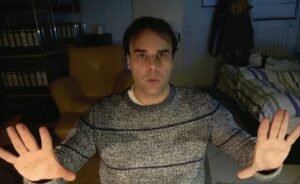 Tobias Rathjen
Tobias Rathjen was a 43-year-old bank employee living with his parents in Hanau. His psychological profile represented a catastrophic fusion of severe, untreated paranoid schizophrenia and deeply entrenched far-right, ultranationalist extremism. He possessed strong incel (involuntary celibate) traits and harbored intense eugenicist fantasies.
In the years preceding the attack, Rathjen filed numerous bizarre criminal complaints with the German Federal Prosecutor’s Office, claiming he was the victim of a vast “shadow government” that was monitoring him via mind control and surveillance. Despite broadcasting his deeply racist views—explicitly calling for the complete annihilation of populations from over twenty countries in North Africa, the Middle East, and Asia—he remained largely ignored by intelligence agencies and retained legal access to firearms through a local shooting club.
February 19, 21:50 // The First Assault (Heumarkt): Rathjen drove his dark Peugeot to the Heumarkt area in central Hanau. He approached the Midnight shisha bar and an adjacent café. Firing rapidly, he murdered three people and wounded several others before returning to his vehicle and fleeing the scene.
21:55 // The Pursuit: A 22-year-old victim, Vili Viorel Păun, witnessed the initial attack and courageously pursued Rathjen’s vehicle in his own car. Păun attempted to call the police emergency hotline (110) four separate times, but the calls failed to connect due to severe systemic routing failures. Rathjen realized he was being followed, stopped his car, and shot Păun dead through the windshield.
22:00 // The Second Assault (Kesselstadt): Rathjen arrived at the Kesselstadt district. He executed victims outside a 24-hour kiosk and then breached the Arena Bar & Café. He shot patrons at point-blank range, murdering a total of five more people across this second location before fleeing to his nearby apartment.
February 20, 03:00 // The Discovery: Utilizing witness reports of his license plate, a heavily armed tactical police unit (SEK) breached Rathjen’s apartment. Inside, they discovered the body of his 72-year-old mother, whom he had executed, alongside Rathjen’s own body, dead from a self-inflicted gunshot wound.
- Exhibit A (The Manifesto and Video): Just days before the attack, Rathjen published a 24-page manifesto and a YouTube video in English. The documents outlined his white supremacist worldview, his belief in global surveillance conspiracies, and his premeditated intent to commit mass murder.
- Exhibit B (The Arsenal): Rathjen legally possessed 9mm semi-automatic pistols (including a Glock 17, SIG Sauer, and Walther). He was a member of a local marksman club and had his firearms license renewed in 2019, despite his history of sending paranoid letters to the government.
- Exhibit C (Emergency Hotline Logs): Forensic analysis of the police communications center revealed that the local 110 emergency dispatch system was chronically understaffed and lacked an overflow routing system. This systemic failure prevented victims and witnesses from communicating the shooter’s location in real time.
Rathjen’s modus operandi was a highly mobile, geographically targeted “hit-and-run” assault. Rather than attacking a single large venue, he specifically selected multiple smaller businesses—shisha bars, cafes, and kiosks—known to be cultural hubs for Hanau’s immigrant and minority communities (specifically those of Turkish, Kurdish, Roma, and Afghan descent).
The ritualistic element of the crime was heavily ideological and deeply paranoid. The subsequent murder of his mother, followed by his suicide, aligns with “family annihilator” traits mixed with the fatalistic endgame of a domestic terrorist who viewed his mission as complete and believed he was escaping the “shadow government” he feared.
- Institutional Blind Spots: Rathjen’s ability to maintain a firearms license while actively suffering from severe paranoid delusions and openly submitting evidence of his psychosis to federal prosecutors highlighted a massive failure in Germany’s threat-assessment protocols.
- Classification: The German Federal Criminal Police Office (BKA) and the Federal Public Prosecutor general officially classified the attack as a far-right extremist act of domestic terrorism motivated by profound racism and xenophobia.
- Custodial Resolution: Deceased at the scene by his own hand, rendering a criminal trial impossible, leaving the survivors to pursue accountability through civil and systemic inquiries.
The Hanau shootings traumatized Germany and served as a violent wake-up call regarding the escalating threat of far-right terrorism, occurring mere months after the anti-Semitic Halle synagogue shooting and the assassination of pro-refugee politician Walter Lübcke.
The tragedy catalyzed intense political and social outrage, particularly from the families of the victims who formed the “Initiative 19. Februar Hanau.” Their relentless campaigning forced multiple parliamentary inquiries. These inquiries severely criticized the local police for the catastrophic failure of the 110 emergency hotline, the delayed and disorganized tactical response, and the systemic negligence that allowed a severely mentally ill man with openly extremist views to possess firearms legally.
The nine innocent civilians targeted for their ethnic backgrounds, alongside the perpetrator’s mother, who lost their lives on February 19, 2020:
| Victim Name | Age | Location of Death |
|---|---|---|
| Kaloyan Velkov | 33 | Midnight Bar (Heumarkt) |
| Fatih Saraçoğlu | 34 | Heumarkt Area |
| Sedat Gürbüz | 29 | Midnight Bar (Heumarkt) |
| Vili Viorel Păun | 22 | Vehicle (Pursued Shooter) |
| Gökhan Gültekin | 37 | Arena Bar & Café (Kesselstadt) |
| Mercedes Kierpacz | 35 | Kiosk (Kesselstadt) |
| Ferhat Unvar | 23 | Arena Bar & Café (Kesselstadt) |
| Hamza Kurtović | 22 | Arena Bar & Café (Kesselstadt) |
| Said Nesar Hashemi | 21 | Arena Bar & Café (Kesselstadt) |
| Gabriele Rathjen | 72 | Perpetrator’s Apartment (Mother) |
Note: An additional five victims sustained serious gunshot wounds but survived the targeted violence.