GRAHAM FREDERICK YOUNG
Heavy Metals / Alkaloids (Thallium, Antimony)
Neasden & Bovingdon, England
Family Members & Co-workers
1961–1962 & 1971
3 Confirmed (Over 70 Poisoned)
DECEASED // CLOSED
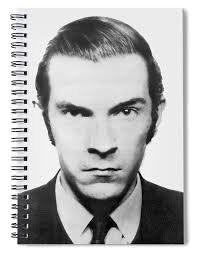
Graham Frederick Young exhibited severe psychopathic traits from early childhood. Possessing a highly intelligent but deeply disturbed mind, he became obsessed with poisons, Adolf Hitler, and notorious historic poisoners like William Palmer. By the age of 14, using his advanced knowledge of chemistry to bluff pharmacists into believing he was a student doing research, he successfully procured lethal amounts of antimony, digitalis, and thallium.
Young lacked any financial or passionate motive. His pathology was purely rooted in scientific sadism and a megalomaniacal desire for control. He viewed humans not as individuals, but as clinical “guinea pigs.” The ultimate thrill for Young was holding the secret of his victims’ rapidly deteriorating health while outsmarting the medical professionals who were desperately trying to diagnose them.
1961–1962 // The Neasden Family Experiments: At age 14, Young began systematically testing antimony on his father, sister, and a school friend, causing severe vomiting and neurological distress. In April 1962, he murdered his stepmother, Molly Young, with a massive dose of thallium. Her death was initially misdiagnosed as a prolapsed bone and she was cremated. Suspicious of his morbid obsession, his family contacted police, and Young was committed to Broadmoor Hospital.
February 1971 // Release & Relapse: Despite continuing to extract poisons from laurel bushes in the asylum grounds, psychiatrists deemed Young “cured” after nine years and released him at age 23. His medical history was inexplicably suppressed from his future employers.
1971 // The “Bovingdon Bug”: Young secured a job as a storeman at John Hadland Laboratories in Hertfordshire. Entrusted with making the company tea, he immediately began lacing the beverages with thallium and antimony. Over several months, over 70 employees fell mysteriously ill—a phenomenon locally dubbed the “Bovingdon Bug.” Young ultimately murdered two co-workers, Bob Egle and Fred Biggs, before his arrogance betrayed him.
- Exhibit A (The Toxicologist’s Diary): Police discovered a meticulous journal in Young’s lodgings. He logged the exact doses administered to his co-workers alongside cold, clinical observations of their suffering, noting when they required “rescue doses” to keep them alive for further study.
- Exhibit B (The Murder Weapons): A search of his room and his person yielded lethal quantities of thallium, antimony, and aconitine, hidden in small vials.
- Exhibit C (Toxicology Reports): At the time, thallium was an obscure heavy metal not routinely tested for in autopsies. Following Young’s arrest, the ashes of Bob Egle and the exhumed remains of Fred Biggs revealed massive, unmistakable concentrations of the poison.
- Exhibit D (The Arrogant Slip): When the company doctor visited to investigate the mysterious illness, Young publicly challenged his medical diagnosis, confidently suggesting thallium poisoning. This display of hyper-specific toxicological knowledge led the doctor to alert the police.
Young’s primary weapon was Thallium, a highly toxic heavy metal favored by assassins because it is colorless, odorless, and tasteless when dissolved in liquid. The poison mimics the symptoms of common illnesses (like gastroenteritis or a severe virus) before causing agonizing peripheral neuropathy, hair loss, and eventual respiratory or cardiac failure.
His behavioral signature was the “hiding in plain sight” methodology. By volunteering for the mundane task of making the office tea, he gained unrestricted, unquestioned access to his victims’ food supply. His ritual was entirely observational; he derived immense satisfaction from standing nearby as his victims drank the poisoned tea, watching the onset of symptoms with the detached fascination of a scientist.
- Physicality & Demeanor: A pale, awkward, and intense young man with dark hair and thick glasses. He was perceived by his co-workers as slightly eccentric but harmless and eager to please.
- Interrogation Behavior: Upon arrest, Young initially denied involvement but eventually confessed with an air of profound arrogance. He took great pride in his chemical knowledge and demanded the respect of the police, frequently correcting their scientific terminology.
- Psychiatric Evaluation: Experts debated his sanity. While he clearly suffered from severe personality disorders and lacked all empathy, he was deemed legally sane and fully aware of the consequences of his actions during his 1972 trial.
- Custodial Resolution: Sentenced to life imprisonment. He spent his incarceration in maximum security, where he continued to manipulate and occasionally attempted to poison fellow inmates. He died of myocardial infarction in his cell at HMP Parkhurst in August 1990 at age 42.
The Graham Young case caused a massive public and political scandal in the United Kingdom. The revelation that a convicted, highly dangerous poisoner was released from a secure psychiatric hospital and allowed to work in an environment with easy access to chemicals, without his employer being informed of his past, led to widespread outrage.
The disaster prompted the government to commission the Aarvold Report, which fundamentally overhauled the assessment and release protocols for mentally abnormal offenders in the UK, creating far stricter oversight boards. Additionally, the case forced an immediate restructuring of the Poisons Act, severely restricting the public sale and accessibility of heavy metals like thallium and antimony.
While Young was convicted of two murders and numerous counts of attempted murder and administering poison, his victims spanned his family and dozens of co-workers. Below are his three confirmed fatalities:
| Victim Name | Relationship to Offender | Date of Death |
|---|---|---|
| Molly Young | Stepmother | April 21, 1962 |
| Bob Egle | Co-worker (Store Manager) | July 7, 1971 |
| Fred Biggs | Co-worker | November 19, 1971 |
Note: Notable survivors who suffered permanent or severe damage included his father Fred Young, sister Winifred Young, and co-workers Jethro Batt and David Tilson.