DERRICK BIRD
.22 Bolt-Action Rifle / 12-Gauge Shotgun
Cumbria, North West England
Family, Associates & Random Civilians
June 2, 2010
12 Confirmed Homicides (11 Injured)
DECEASED // SUICIDE
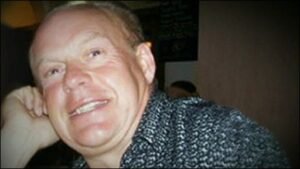 Derrick Bird
Derrick Bird was a 52-year-old self-employed taxi driver known to his community as a quiet, unassuming man. He possessed a valid shotgun certificate and a firearms license, holding weapons primarily for rural pest control. However, beneath his quiet exterior, Bird was spiraling into profound paranoia and grievance-fueled rage.
His psychological collapse was triggered by a toxic combination of financial and interpersonal stressors. He was under investigation by HM Revenue and Customs for tax evasion, fostering a deeply held delusion that he was imminently going to prison. Concurrently, he harbored a bitter dispute with his twin brother, David, and the family solicitor over his ailing mother’s will. Finally, he felt victimized and humiliated by fellow taxi drivers at the local rank. Believing his life was essentially over, Bird chose to exact lethal retribution against those he blamed before expanding his violence to the public at large.
Early Morning // Targeted Retribution: Bird’s spree began with calculated assassinations. He drove to the home of his twin brother, David Bird, in Lamplugh and shot him dead. He then drove to Frizington and executed the family solicitor, Kevin Commons, on his driveway.
10:30 a.m. // The Taxi Rank: Bird drove his Citroën Picasso to the Duke Street taxi rank in Whitehaven. He called over fellow driver Darren Rewcastle and shot him point-blank in the face. He then opened fire on several other drivers who scattered in panic, severely wounding them.
10:35 a.m. – 12:00 p.m. // The Rural Spree: Transitioning from targeted violence to indiscriminate mass murder, Bird drove through the rural communities of Egremont, Seascale, and Gosforth. He fired out of the window of his moving vehicle at pedestrians, cyclists, and other motorists, stopping periodically to take aim at specific targets of opportunity. This phase claimed nine additional lives and caused mass panic across the region.
12:30 p.m. // The Final Woods: After crashing his vehicle near the remote village of Boot, Bird abandoned the car and fled on foot into dense woodland near Oak How. A massive armed police manhunt converged on the area. At approximately 1:40 p.m., police discovered his body; he had committed suicide by shooting himself in the head with his own rifle.
- Exhibit A (The Arsenal): A CZ 452 .22 caliber bolt-action rifle (fitted with a telescopic sight and a sound moderator/silencer) and a side-by-side 12-gauge double-barreled shotgun. Both were fully licensed and legally held.
- Exhibit B (The Citroën Picasso): The perpetrator’s vehicle acted as a mobile sniper platform, allowing him to bypass the traditional active-shooter profile of a barricaded suspect and continuously change jurisdictions to outpace initial police deployment.
- Exhibit C (Financial Records): Post-incident analysis of his finances confirmed his ongoing investigation by HM Revenue and Customs, validating the primary source of his extreme paranoia that catalyzed the psychological break.
Bird’s modus operandi represented a hybrid mass casualty event. It began as highly focused, targeted grievance violence against specific individuals (his twin, the solicitor, and rival taxi drivers) before immediately degrading into a sprawling, opportunistic spree. Once his specific “enemies” were eliminated, his targets became entirely arbitrary.
His forensic signature involved exploiting the rugged topography and vast distances of the Lake District. By remaining constantly mobile in his vehicle and utilizing a scoped rifle equipped with a silencer, he engaged targets from a distance, frequently striking victims who were entirely unaware of his presence or the origin of the gunfire.
- Physicality & Demeanor: A 52-year-old male. Witnesses who interacted with him during the spree described him driving slowly alongside them, calling them over to his car window with calm indifference before raising his weapon and firing point-blank.
- Institutional Awareness: He was a licensed firearms holder with no major criminal history that would have triggered a revocation of his certificates under the laws of the time.
- Custodial Resolution: Deceased at the scene by a self-inflicted gunshot wound, concluding the 45-mile pursuit.
The Cumbria Shootings severely tested the capabilities of rural British policing. Standard patrol officers in the UK are unarmed, and Armed Response Vehicles (ARVs) had to be scrambled from across the vast, geographically challenging county. The speed and mobility of the shooter highlighted the extreme difficulty of containing a mobile threat across a wide rural expanse.
Unlike the Hungerford or Dunblane massacres, the Cumbria shootings did not result in sweeping bans on entirely new classes of firearms. The weapons Bird used were standard pest-control tools deeply embedded in British rural culture. However, the official inquiry led to significantly tightened protocols regarding the sharing of medical information between general practitioners and police licensing departments to ensure emerging mental health crises could trigger the proactive removal of firearms.
The 12 victims murdered by Derrick Bird during his sprawling rampage across the Lake District:
| Victim Name | Age | Location of Death |
|---|---|---|
| David Bird | 52 | Lamplugh (Twin Brother) |
| Kevin Commons | 60 | Frizington (Family Solicitor) |
| Darren Rewcastle | 43 | Whitehaven (Fellow Taxi Driver) |
| Susan Hughes | 57 | Egremont |
| Kenneth Fishburn | 71 | Egremont |
| Isaac Dixon | 65 | Egremont |
| Jennifer Jackson | 68 | Seascale |
| James Jackson | 67 | Seascale |
| Garry Purdham | 31 | Gosforth |
| Jamie Clark | 23 | Seascale |
| Michael Pike | 64 | Seascale |
| Jane Robinson | 66 | Seascale |
Note: An additional 11 individuals sustained serious gunshot wounds and injuries over the course of the 45-mile pursuit.