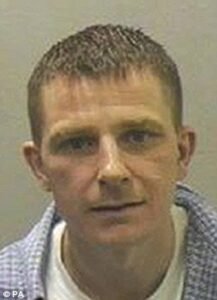
Steven John Grieveson operated as a predatory serial killer in Sunderland, targeting adolescent boys and young males. Dubbed “The Sunderland Strangler”, Grieveson harbored deep-seated internal conflicts regarding his sexuality, which prosecution trials later indicated served as a primary behavioral catalyst for his crimes—specifically murdering victims to eliminate anyone who might reveal or recognize his lifestyle.
Psychologically, Grieveson displayed cold compartmentalization and escalating destructive patterns. After committing his initial murder in 1990, he experienced an extended dormancy before returning to a concentrated multi-victim surge in early 1994, showing calculated detachment and a total absence of remorse during police interrogations.
Grieveson’s tactical methodology centered on exploiting derelict environments, abandoned allotment sheds, and empty residential properties across Sunderland. He targeted teenage acquaintances or school peers who shared similar local networks, luring or meeting them in secluded settings where he utilized ligature strangulation as his primary mechanism of execution.
To obscure physical trace evidence, fingerprints, and biological transfer, Grieveson repeatedly resorted to arson—setting fire to the victims’ bodies and surrounding structures post-mortem. Early investigators initially misattributed some early-stage localized deaths or glossed over contextual clues, allowing the perpetrator temporary operational security.
- Initial Apprehension: Northumbria Police arrested Grieveson in March 1994 following suspicious incidents and attempted break-ins near crime scenes, eventually linking him to the rapid sequence of 1993–1994 murders.
- Written Admissions: In June 2004, Grieveson transmitted formal letters to Victim Liaison Services explicitly confessing to multiple murders, though omitting initial historical actions.
- Cold Case Re-Prosecution: Modern forensic review and renewed investigative pressure allowed prosecutors to secure a landmark 2013 conviction for his earliest 1990 victim, sealing a fourth life sentence.
May 26, 1990 // Simon Martin: The 14-year-old schoolboy is assaulted and murdered in Sunderland; a crime initially obscured before modern forensic breakthroughs tied it back to Grieveson years later.
November 26, 1993 // Thomas Kelly: The 18-year-old is strangled inside an abandoned allotment shed in Fulwell, with his body subsequently set on fire to destroy evidence.
February 4, 1994 // David Hanson: The 15-year-old is killed on Roker Terrace, Sunderland, marking an escalation in the predatory frequency.
February 25, 1994 // David Grieff: The 15-year-old schoolboy is murdered in a derelict Fulwell allotment just yards away from the earlier Kelly site.
March 11, 1994 // Police Interception: Authorities apprehend Grieveson following local property investigations, halting his active string of killings.
February 28, 1996 // Leeds Crown Court Judgment: Following a high-profile trial, Grieveson is convicted of three murders and handed three life sentences with a 35-year minimum tariff, later expanded to four life sentences in 2013.
The reign of Steven Grieveson left deep psychological scars across Sunderland, particularly because several victims attended the same local educational facility (Monkwearmouth Academy) and initial community fears pointed toward systemic oversights or missed intervention windows.
The eventual closure brought by successive court trials—culminating in the 2013 conviction for the Simon Martin homicide—provided long-delayed legal resolution to the grieving families, reinforcing structural improvements in how regional UK forces review clustered juvenile deaths and historical cold cases.
| Victim Name | Date | Context of Fatality |
|---|---|---|
| Simon Martin (14) | May 26, 1990 | First identified victim. Subjected to brutal head injuries and murder in Sunderland; conviction secured decades later in 2013. |
| Thomas Kelly (18) | November 26, 1993 | Strangled inside an abandoned allotment shed in Fulwell; body subsequently ignited to conceal forensic evidence. |
| David Hanson (15) | February 4, 1994 | Targeted and murdered at a residential location on Roker Terrace. |
| David Grieff (15) | February 25, 1994 | Attacked and killed in a derelict Fulwell allotment close to the previous Thomas Kelly crime scene. |