Incident Report // Comprehensive Forensic Dossier
The 2017 Las Vegas Strip Shooting
An exhaustive operational reconstruction of the elevated high-volume assault from the Mandalay Bay Resort, the forensic ballistics analysis of bump-stock modified semi-automatic configurations, and the FBI behavioral panel conclusions.

📋 Forensic Case Profile Ledger
Perpetrator:
Stephen Craig Paddock (Age 64)
Arsenal Suite:
24 Total Firearms (14 AR-15s & 8 AR-10s with Bump Stocks)
Firing Point:
Suite 32-135, Mandalay Bay Hotel (32nd Floor)
Target Focus:
MASS OUTDOOR GATHERING // HIGH-DENSITY CROWD
Incident Date:
October 1, 2017 (22:05–22:15 PDT)
Fatalities:
60 Total (58 On-Scene, 2 Later Succumbed)
Total Injuries:
850+ (410+ via Ballistics, Remainder via Trampling/Flight)
Final Outcome:
SUICIDE VIA SELF-INFLICTED BALLISTIC TRAUMA
Tactical Note: The assault stands as the deadliest mass shooting executed by a lone actor in United States history, utilizing an elevated vantage point to neutralize ground-level terrain defense.

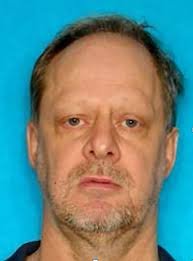
Subject Profile Photo

Stephen Craig Paddock
Age: 64 // High-Stakes Gambler // Deceased

Perpetrator Profile & Complex Behavioral Anomaly

Stephen Craig Paddock was a 64-year-old retired real estate investor, auditor, and high-stakes video poker gambler living in Mesquite, Nevada. Unlike typical mass casualty perpetrators, Paddock lacked an overt criminal history, a documented history of severe mental illness, or explicit ties to ideological, political, or religious extremist cells. He operated as a highly disciplined, affluent individual who spent his final years meticulously acquiring substantial wealth, multiple residences, and an extensive collection of high-grade military-style firearms.

An exhaustive post-incident investigation spearheaded by the FBI’s Behavioral Analysis Unit (BAU) concluded that Paddock lacked a clear, singular ideological motivation. Instead, analysts isolated a progressive deterioration in his physical health, personal relationships, and financial stability due to systemic gambling losses. Described as a hyper-controlling narcissist obsessed with status and intellectual dominance, Paddock engineered the mass casualty event as a final, calculated assertion of control, seeking historical notoriety through a clinically planned tactical action.

Paddock targeted the Route 91 Harvest country music festival, an open-air concert venue located directly across Las Vegas Boulevard from his elevated hotel suite. Over 22,000 attendees populated the 15-acre lot. By selecting an outdoor target lacking immediate overhead protection or structural fortifications, Paddock calculated that firing down from a significant height would prevent security forces from mounting an immediate defense.

Logistical Staging & Ballistic Modification Mechanics

Between September 25 and October 1, 2017, Paddock checked into Suite 32-135 at the Mandalay Bay Resort and Casino, utilizing his high-tier player status to secure an expansive view of the Strip. Over multiple days, he systematically smuggled 24 separate firearms, thousands of rounds of ammunition, and tactical gear into his room using more than ten discrete pieces of luggage, completely bypassing standard hotel security protocols. The arsenal comprised fourteen .223-caliber AR-15 style rifles, eight .308-caliber AR-10 style battle rifles, a bolt-action rifle, and a revolver.

To maximize his volume of fire, Paddock fitted twelve of the semi-automatic rifles with slide-fire “bump stock” attachments. This modification harnesses the weapon’s natural recoil impulse to slide the rifle back and forth rapidly against the operator’s stationary trigger finger, mimicking fully automatic cycling rates of 400 to 800 rounds per minute. Paddock also staged massive 60-round and 100-round high-capacity magazines, alongside independent surveillance cameras positioned on his room service carts to monitor the hotel hallways for approaching tactical response teams.

The Elevated Operational Chronology: October 1, 2017

**21:59 PDT // Security Countermeasure Encounter:** Mandalay Bay hotel security guard Jesus Campos was dispatched to the 32nd floor to investigate an unrelated open-door alert. Discovering a bracket permanently screwed into the hallway fire door to block access, Campos attempted to investigate. Paddock, monitoring his hidden service-cart cameras, fired more than 200 rounds through his suite door into the hallway, striking Campos in the leg and temporarily halting the hotel’s interior response framework.

**22:05 PDT // Firing Phase Initialization:** Paddock used a heavy hammer to shatter two large glass windows in his suite. Positioning a rifle on a tripod, he opened sustained fire down into the Route 91 Harvest festival enclosure from a distance of roughly 490 yards. The initial burst of high-velocity ammunition caught the crowd completely off-guard during a performance, with many confusing the rapid, echo-heavy ballistic cracks for fireworks.

**22:08 PDT // Sustained High-Volume Barrage:** As the crowd realized an active threat was underway, a massive panic erupted. Paddock continuously switched between modified rifles as barrels overheated, firing large, sustained bursts down into the tightly packed exit choke points. Recognizing the threat environment, responding Las Vegas Metropolitan Police Department (LVMPD) officers formed immediate tactical groups, using their bodies to shield civilians and tracing the muzzle flashes back to the upper levels of Mandalay Bay.

**22:12 PDT // Fuel Tank Target Diversion:** Seeking to create a massive secondary explosion to maximize casualties and hinder emergency vehicles, Paddock deliberately targeted large aviation fuel tanks located on the western edge of the nearby McCarran International Airport. Two rifle rounds successfully punctured a tank shell, but the fuel failed to ignite due to the low-sensitivity properties of commercial jet fuel.

**22:15 PDT // Ceasefire & Termination:** Paddock discharged his final rounds down toward the Strip, concluding an intense ten-minute firing window during which he fired more than 1,050 total rounds. Right as a heavily armed LVMPD SWAT entry team assembled outside his room, Paddock placed a handgun in his mouth and fired a single lethal shot, terminating his life before officers could breach the suite.

Forensic Processing & Medical Triage Dynamics

At 23:20 PDT, the SWAT team executed a explosive breach of Suite 32-135, discovering Paddock’s body amidst hundreds of spent shell casings, tools, and scattered rifles. The physical scene on the ground at the festival lot was catastrophic. Emergency medical personnel faced historic triage challenges, managing hundreds of patients suffering from penetrating ballistic wounds, arterial severing, and severe blast-echo trauma alongside widespread injuries caused by the initial stampede.

The Clark County Medical Examiner confirmed that 58 victims died from direct injuries on the night of the attack. Two additional survivors would subsequently succumb to their extensive injuries in 2019 and 2020, bringing the final verified death toll to 60. Clark County hospitals treated more than 850 patients, marking the event as a watershed moment for American emergency medicine and tactical mass casualty response protocols.

Systemic Legislative Overhauls & Civil Settlements

The tactical deployment of bump stock attachments during the assault triggered massive national political and legal reactions. In December 2018, the US Department of Justice officially amended its interpretation of the National Firearms Act, reclassifying bump-stock devices as prohibited “machineguns” and forcing a nationwide ban on their sale and possession. This administrative rule faced extensive federal court challenges, highlighting the intricate legal landscape surrounding firearm modifications in the United States.

In the civil litigation arena, hundreds of survivors and victims’ estates filed class-action lawsuits against MGM Resorts International, the corporate owner of the Mandalay Bay Hotel, alleging structural security and monitoring failures. In October 2020, a landmark judicial resolution was finalized, with MGM agreeing to pay an $800 million civil settlement to be distributed among the families of the deceased and the hundreds of physical trauma survivors, concluding one of the largest hospitality liability suits in global legal history.

Verified Casualty Registry (60 Fatalities)

The official, verified registry of the 60 innocent lives lost as a result of the elevated assault executed on October 1, 2017:

• Hannah Ahlers (Age 34)
• Heather Alvarado (Age 35)
• Dorene Anderson (Age 49)
• Carrie Barnette (Age 34)
• Jack Beaton (Age 54)
• Steve Berger (Age 44)
• Candice Bowers (Age 40)
• Denise Burditus (Age 50)
• Sandy Casey (Age 35)
• John Phippen (Age 56)
• Andrea Castilla (Age 28)
• Denise Cohen (Age 58)
• Austin Davis (Age 29)
• Thomas Day Jr. (Age 54)
• Christiana Duarte (Age 22)
• Stacee Etcheber (Age 50)
• Brian Fraser (Age 39)
• Keri Galvan (Age 31)
• Dana Gardner (Age 52)
• Angela Gomez (Age 20)
• Rocio Guillen Rocha (Age 40)
• Charleston Hartfield (Age 36)
• Christopher Hazencomb (Age 44)
• Jennifer Topaz Irvine (Age 42)
• Teresa Nicol Kimura (Age 38)
• Jessica Klymchuk (Age 34)
• Carly Kreibaum (Age 33)
• Rhonda LeRocque (Age 42)
• Victor Link (Age 55)
• Jordan McIldoon (Age 23)
• Kelsey Meadows (Age 28)
• Calla Medig (Age 28)
• James Melton (Age 29)
• Patricia Mestas (Age 67)
• Austin Meyer (Age 24)
• Adrian Murfitt (Age 35)
• Rachael Parker (Age 33)
• Jennifer Parks (Age 36)
• Carrie Parsons (Age 31)
• Lisa Patterson (Age 46)
• Melissa Ramirez (Age 26)
• Jordyn Rivera (Age 21)
• Quinton Robbins (Age 20)
• Cameron Robinson (Age 28)
• Tara Roe (Age 34)
• Lisa Romero-Muniz (Age 48)
• Chris Roybal (Age 28)
• Brett Schwanbeck (Age 61)
• Bailey Schweitzer (Age 20)
• Laura Shipp (Age 50)
• Erick Silva (Age 21)
• Susan Smith (Age 53)
• Brennan Stewart (Age 30)
• Derrick Taylor (Age 56)
• Neysa Tonks (Age 46)
• Michelle Vo (Age 32)
• Kurt von Tillow (Age 55)
• William Wolfe Jr. (Age 22)
• Kimberly Gervais (Age 57, Succumbed 2019)
• Samanta Arjune (Age 49, Succumbed 2020)