Incident Report // Comprehensive Forensic Dossier
The Las Cruces Bowling Alley Massacre
An analytical reconstruction of the 1990 New Mexico commercial execution ambush, the forensic analysis of a catastrophic multi-victim close-range ballistic scene, and the ongoing multi-agency cold case investigation.

📋 Forensic Case Profile Ledger
Perpetrators:
TWO UNIDENTIFIED SUBJECTS
Weapon Profile:
.22-Caliber Handguns (Two Independent Units)
Location:
Las Cruces Bowl, 1201 East Amador Ave, Las Cruces, NM
Target Focus:
COMMERCIAL SAFE ROBBERY / WITNESS ELIMINATION
Incident Date:
February 10, 1990 (c. 08:20–08:50 MST)
Fatalities:
4 Total (3 Executed On-Scene, 1 Later Succumbed)
Survivors:
3 Total (All Sustained Critical Cranial Bullet Wounds)
Current Status:
ACTIVE COLD CASE // INTERPOL / FBI TASKED
Tactical Note: To permanent-lock the crime scene and delay first responder mobilization, the perpetrators set fire to the building’s central desk area immediately after executing the seven victims.

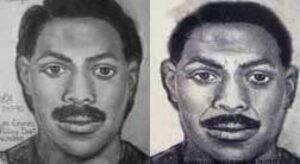
Forensic Composite Renderings

Subjects 1 & 2 (Unidentified)
Estimated Ages in 1990: Late 20s to late 30s // Hispanics

Tactical Breach & Victim Consolidation Phase

On the morning of Saturday, February 10, 1990, a highly coordinated armed robbery escalated into a cold-blooded mass execution at the Las Cruces Bowl bowling alley in Las Cruces, New Mexico. At approximately 08:20 AM, prior to the facility opening its doors to the general public, two unidentified males breached the unsecured main entrance. The store manager, Stephanie C. Senac, 34, was inside her main office compiling previous receipts alongside her 12-year-old daughter, Melissia Repass, and her daughter’s friend, 13-year-old Jordon Holguin.

The gunmen entered the office with .22-caliber handguns drawn, demanding immediate access to the business safe, which held roughly \$4,000 to \$5,000 in cash. While the vault extraction was actively underway, the scene’s logistics became progressively complicated. The facility’s cook, Ida Holguin, arrived for her morning kitchen shift and walked directly into the active perimeter. Shortly thereafter, independent pin-setter mechanic Steven Teran, 26, entered the building to service the rear mechanics bay, bringing along his two young daughters, 6-year-old Valerie Teran and 2-year-old Elisha Teran, because his wife was at an appointment. The perpetrators successfully intercepted and captured all newcomers, herding them together into the tight confines of the manager’s desk office.

Close-Range Ballistic Execution & Arson Deployment

**08:45 AM // The Mass Execution:** Once the contents of the commercial safe were completely stripped, the perpetrators determined that leaving seven eyewitnesses in a mid-sized municipal community posed an insurmountable threat to their escape logistics. Without warning, they ordered all seven individuals—including the three children under the age of 14—to lay flat on the floor facing down. Standing directly above the group, both gunmen systematically discharged their low-velocity .22-caliber weapons directly into the back of the victims’ skulls and necks. Multiple victims were shot repeatedly to ensure absolute lethal results.

**08:48 AM // The Arson Concealment:** Seeking to destroy any physical footprint left behind on the furniture or door assemblies, the gunmen gathered local paperwork and synthetic items, intentionally setting fire to the executive office desk area. As heavy smoke and real fire billowed out across the building’s central core, the two subjects exited the building, melting into the surrounding urban grid with the stolen cash. Despite suffering catastrophic ballistic head trauma, 12-year-old Melissia Repass managed to crawl through the smoke to a desk landline, successfully placing a frantic 911 dispatch call at 08:54 AM that enabled emergency units to intercept the scene before the fire fully consumed the victims.

Forensic Preservation & Survival Trauma Metrics

When police officers and tactical medical responders breached the burning office room, they encountered a horrific high-density crime scene. Steven Teran and his 6-year-old daughter Valerie were pronounced dead on-site from catastrophic neurological trauma. His youngest daughter, 2-year-old Elisha Teran, succumbed to her injuries shortly after arrival at an emergency trauma bay. Jordon Holguin died at the scene as well, bringing the immediate death toll to four.

Miraculously, three victims—Ida Holguin, Stephanie Senac, and the heroic 12-year-old Melissia Repass—survived the close-range execution shots despite sustaining severe cranial injuries. They underwent immediate emergency neurological surgeries, surviving long-term to provide investigators with incredibly consistent descriptions of the two attackers. Stephanie Senac passed away years later in 1999 due to lingering medical complications directly tied to her ballistic trauma, highlighting the permanent biological destruction caused by the event.

Investigative Roadblocks, DNA Horizons, and Active Tracking

The execution-style massacre sparked one of the largest and most frustrating multi-jurisdictional investigations in the history of the American Southwest. The Las Cruces Police Department partnered with the New Mexico State Police and the FBI, establishing a dedicated multi-agency task force. Investigators vetted over 2,000 distinct leads and utilized surviving eyewitness testimonies to compile high-accuracy color composite sketches of two Hispanic males—one estimated to be between 30 and 40 years old with a mustache, and a younger accomplice estimated to be in his late 20s.

Despite checking fingerprints and looking for identical robbery tactics across the US-Mexico border, the suspects were never identified. Over the decades, investigators have continually re-evaluated preserved crime scene materials, hoping to utilize advanced forensic genealogy and trace DNA analysis on the bullet casings and office files. The Las Cruces Bowl building was eventually demolished and replaced by an alternative commercial layout. The case remains wide open, carrying a large standing reward, and continues to be tracked as an active, high-priority unresolved mass violence homicide investigation.

Complete Verified Casualty & Victim Registry

The historical verified registry of the innocent lives lost as a result of the execution-style attack inside the Las Cruces Bowl on February 10, 1990:

• Steven Teran (Age 26, Pin-Setter Mechanic / Loving Father)
• Valerie Teran (Age 6, Eldest Daughter of Steven)
• Elisha Teran (Age 2, Youngest Daughter of Steven)
• Jordon Holguin (Age 13, Youth Bystander / Close Friend)
• Stephanie C. Senac (Age 34, Manager; survived initial assault, passed away in 1999 from complications)