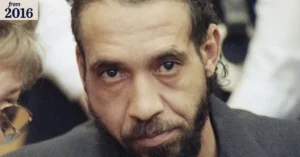
Julio González (Age 36)
\$1.00 of Regular Gasoline & Matches
1959 Southern Boulevard, The Bronx, New York
UNLICENSED VENUE / DOMESTIC DISPUTE REVENGE
March 25, 1990 (c. 03:00 EST)
87 Total (61 Men, 26 Women)
At Least 3 (Including Ex-Girlfriend Lydia Feliciano)
25 YEARS TO LIFE PER COUNT (Deceased 2016)
Julio González was a 36-year-old Cuban refugee who arrived in the United States during the 1980 Mariel boatlift. Chronically underemployed and struggling with deep personal instability, González’s psychological baseline deteriorated significantly after losing his job at a lamp factory and breaking up with his long-term girlfriend, Lydia Feliciano. Feliciano was employed as a coat-check ticket taker at the Happy Land social club, a two-story establishment located in the West Farms neighborhood of the Bronx.
On the evening of March 24, 1990, González entered the facility, which was heavily crowded with young patrons celebrating Carnival, primarily drawn from the region’s Honduran and Garifuna American immigrant communities. A violent argument erupted between González and Feliciano near her station. When González refused to cease his aggressive behavior, a club bouncer stepped in, physically overpowering him and forcibly ejecting him from the building at approximately 02:30 AM. Driven by a desire for targeted revenge, González walked the surrounding streets in an intoxicated rage, seeking a mechanism to punish those who had humiliated him.
González tracked down an Amoco service station three blocks away, fabricating a story to the attendant that his personal vehicle had run out of fuel. He purchased exactly one dollar’s worth of regular gasoline, filling an open container before marching back toward Southern Boulevard. His target, the Happy Land social club, was a physical architectural hazard. Measuring roughly 60-by-20 feet, the layout featured a single open, wooden stairwell connecting the first-floor bar space to the second-floor dance floor.
The establishment had been formally investigated and cited by New York City agencies in 1988 for critical structural failures, including a total lack of automated fire sprinklers, operational fire alarms, and an insufficient number of fire escapes. Management had bypassed these closure orders, operating under the radar without a liquor license. Crucially, to prevent patrons from dodging the venue’s entry cover charge, operators had permanently locked and bolted the secondary exit door. This structural choice transformed the narrow entry stairwell into the single point of egress for the entire crowd.
**03:00 AM // The Ignition Sequence:** González slipped back into the unmonitored ground-floor entryway of the building. Emptying his container, he poured the gasoline directly across the base of the wooden staircase and the primary exit threshold. Striking a series of matches, he ignited the liquid puddle. The accelerant flashed instantly, creating a high-volume wall of flame that surged directly up the wooden stairwell, consuming the primary exit artery within seconds. González crossed the street, watching the initial smoke billow before calmly walking back to his apartment.
**03:02 AM // The Flashover & Toxic Plume Migration:** Inside the main club spaces, the flashover triggered an immediate mass panic. Worshippers on the upper floor rushed toward the single staircase, only to find it completely consumed by ascending flames. The fire interacted with the building’s synthetic insulation and plastic bar supplies, filling the windowless, unventilated structure with a heavy cloud of toxic carbon monoxide and cyanide smoke.
**03:05 AM // Exit Failure & Crush Dynamics:** Dozens of fleeing patrons became trapped in a fatal crush dynamic near the base of the dance floor and along the perimeter walls. Desperate individuals attempted to punch through a wall into an adjoining union hall, but the toxic atmospheric shift was too rapid. Forensic assessments later proved that the internal atmospheric contamination was so instantaneous that numerous victims succumbed to asphyxiation in their seats, still holding their beverages. Lydia Feliciano, the target of González’s rage, managed to escape along with a bouncer through a small rear service door corridor right as the front room flashed.
**03:12 AM // FDNY Suppression Phase:** New York City Fire Department units arrived on scene to find heavy fire blowing out into Southern Boulevard. Firefighters launched an aggressive interior suppression effort, quickly bringing the primary staircase fire under control within five minutes. Upon breaching the upper floor, responders discovered a scene of total devastation: 68 bodies were stacked on the second floor, 19 downstairs, and 6 within feet of the primary exit door, bringing the final death toll to 87.
Arson investigators and NYPD detectives quickly narrowed down the cause of the fire after interviewing the surviving coat-check clerk, Lydia Feliciano, who detailed her argument with González. Police units moved to González’s apartment just hours after the attack. They found him asleep in his bed, with his gasoline-soaked clothing sitting on the floor. During his interrogation, González confessed to purchasing the fuel and lighting the fire, showing zero emotional response to the scale of the mass casualty event.
The post-mortem examinations conducted by the medical examiner verified that the vast majority of the 87 victims died from acute smoke inhalation and asphyxiation rather than direct thermal burns. This underscores how a small amount of fuel, when introduced to a windowless space without safety options, can act as a weapon of mass destruction.
Julio González faced a massive criminal trial in 1991. He was indicted on 87 counts of intentional murder and 87 counts of arson. The jury rejected all arguments regarding his mental baseline or intoxication level, finding him fully liable for the planning and execution of the attack. The judge sentenced González to **174 concurrent sentences of 25 years to life**—which stood at the time as the most extensive punitive sentence ever handed down in the history of the New York judicial registry. González remained incarcerated under maximum-security conditions until he suffered an acute myocardial infarction and died in custody on September 13, 2016, at the age of 61.
The scale of the disaster forced the administration of Mayor David Dinkins to establish immediate multi-agency task forces comprising fire inspectors, building engineers, police units, and utility teams. This group, known as the **Social Club Task Force**, launched an aggressive citywide sweep that inspected and boarded up thousands of hidden, non-compliant, or unlicensed meeting halls across the five boroughs. The tragedy led to strict changes in municipal building codes, making it a criminal offense to lock emergency exits during active occupancy hours and requiring mandatory fire alarms and multi-point exits for all small commercial venues.
The Happy Land fire stands historically as the deadliest mass murder in New York City history since the 1911 Triangle Shirtwaist Factory fire, which coincidentally occurred on the exact same calendar day. The disaster claimed the lives of 87 individuals (61 males and 26 females), primarily teenagers and young adults under the age of 25. Due to the historical nature of this database, the complete names and age structures of the victims are logged securely within the main federal and state archives.